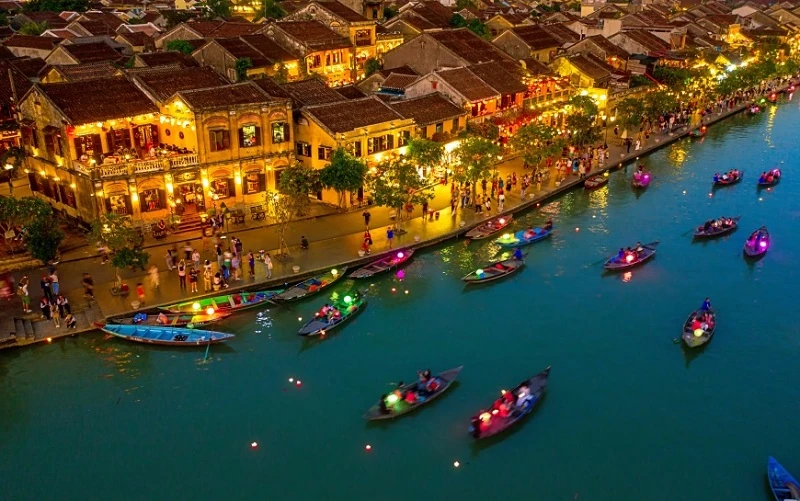
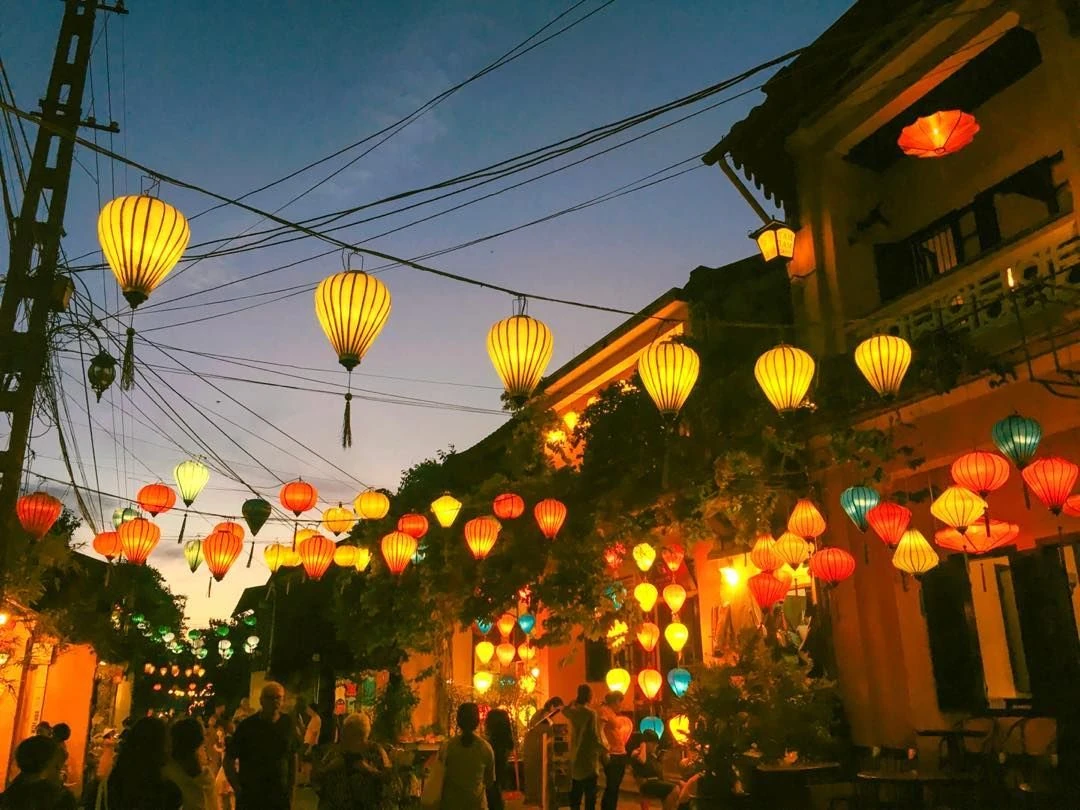
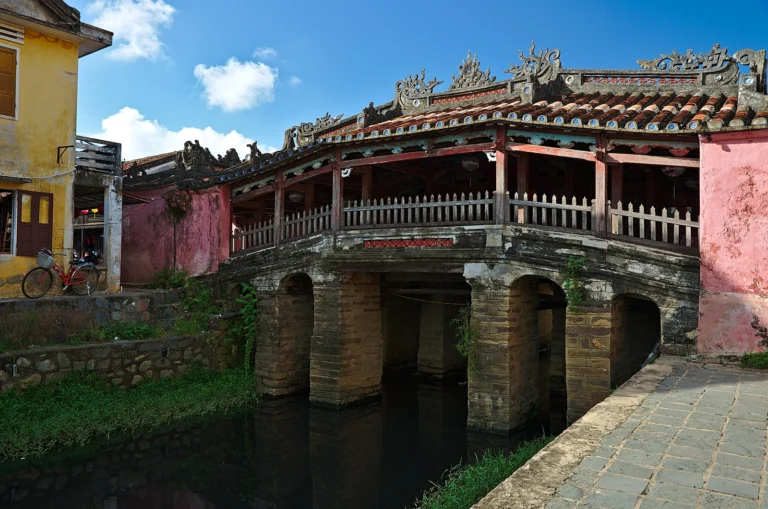
Nestled along the lower reaches of the Thu Bon River, where its gentle waters prepare to merge with the vast East Sea, Hoi An is far more than just a destination—it is a unique coordinate on the map of world cultural heritage. Positioned at approximately 15°52′ North latitude and 108°20′ East longitude in Quang Nam Province, this ancient town boasts a masterwork of feng shui geography, explaining both its historical prosperity and its enduring vitality across the centuries. Hoi An’s “backing onto mountains, facing the water” terrain is not merely a classic feng shui concept, but also a strategic geographical reality. With its back resting against the fertile plains and expansive midlands of Quang Nam and its face turned toward Cua Dai—a vital trading gateway—the town became a convergence point for water and energy, drawing in vitality and prosperity. This seamless interplay between the river system (the Mother Thu Bon River and the Hoai River) and the open sea forged a bustling trading port, an ideal rendezvous along the legendary Maritime Silk Road.
The history of Hoi An is a polyphonic epic, originating from the brilliant Sa Huynh culture and evolving into a major seaport of the Champa Kingdom under the name Lam Ap Pho,
Hoi An is not merely a heritage site, but a living museum of ancient architecture and urban planning. Strolling through its narrow lanes, visitors feel as though they have stepped into a multidimensional artistic space, where every house and every tiled roof tells a story. Its most defining feature is the deep, narrow tube houses, which feature modest street fronts yet stretch back tens of meters in length. The traditional “three-compartment house” structure is artfully adapted: the front space is dedicated to commerce, the middle features an open courtyard (skylight well) for natural light, ventilation, and landscaping, and the rear serves as living quarters. These timber frames crafted from ironwood,
Hoi An is not simply a quiet painting to be admired from afar, but a vibrant tapestry that invites travelers to step inside, touch, and experience it with all their senses. Upon setting foot here, wanderers are immediately swept into a whirlwind of priceless, hands-on experiences—activities that only by trying firsthand can one truly grasp the soul of this land. It is a sense of awe when standing before the grandeur of nature, blended with tranquility and peace when immersing oneself in the unhurried rhythm of daily life in the ancient town.
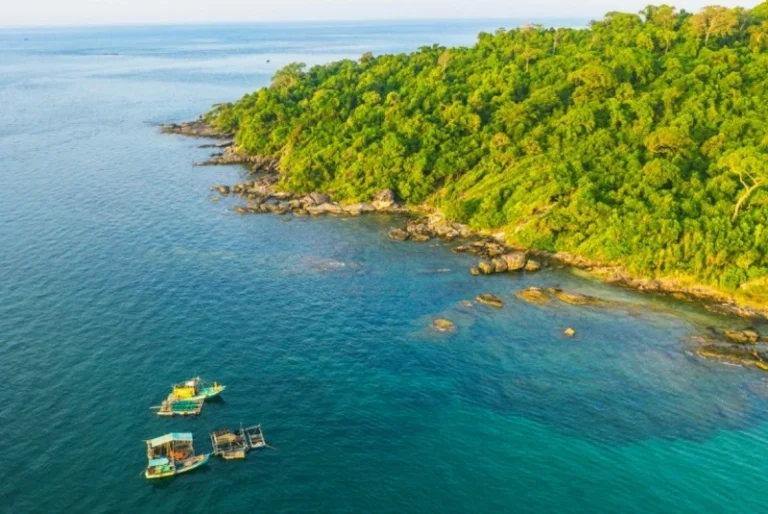
A journey of discovery often begins with an excursion out to sea toward Cu Lao Cham (Cham Islands), where travelers have the chance to immerse themselves in crystal-clear, jade-green waters. The sensation of skimming across azure waves, letting the ocean breeze brush through your hair, and then bursting with delight while snorkeling to admire a dazzling underwater world of coral reefs is an unforgettable memory. Schools of tiny fish dart playfully about, while coral formations of every conceivable shape unfold before your eyes like a fairytale garden, melting away all the worries of everyday life. Alternatively, for those drawn to stillness and spirituality, a pilgrimage to the Marble Mountains (Ngu Hanh Son) will
<