Nestled amid the azure waters of the Gulf of Siam across centuries of ebb and flow, Coral Island (Koh Larn) carries a rich chronicle that extends far beyond its modern image as a quintessential beach getaway. Ancient maritime records and local historical archives note that human footprints first marked the island as far back as the late Ayutthaya Kingdom. Back then, the island served as a prime natural outpost and shelter, shielding merchant vessels navigating the Gulf of Thailand from tropical tempests and the furious southwest monsoon. More than just a haven for seafarers braving the open ocean, the tranquil bays encircling the island also became bountiful fishing grounds, where early indigenous fishing communities erected stilted shacks, cast their nets, and sustained a humble, symbiotic rhythm with the sea across successive generations.
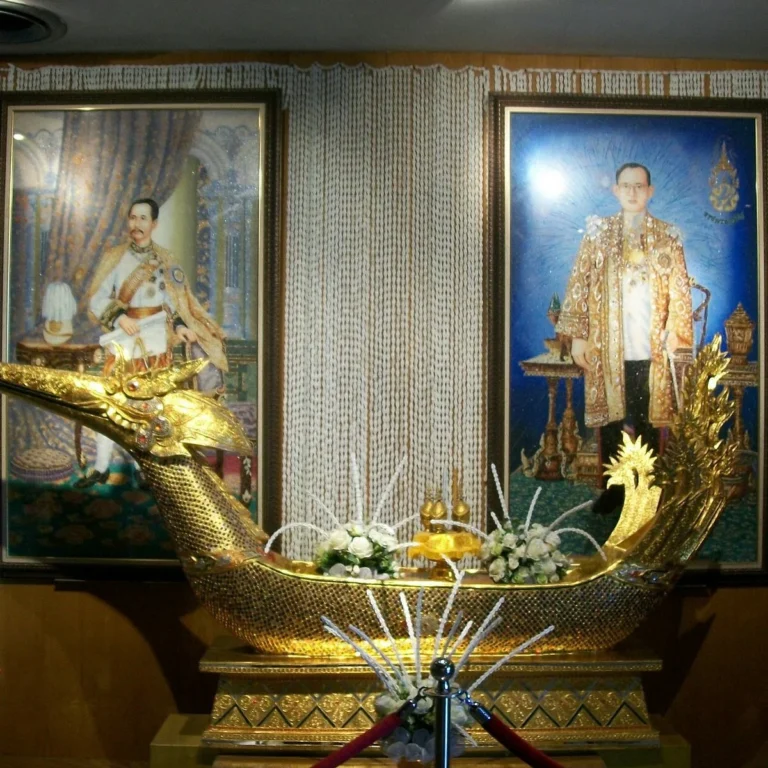
Entering the illustrious Rattanakosin period, Koh Larn’s scenic stature and ecological value caught the eye of the Siamese royal court. During a historic southern royal inspection tour, King Chulalongkorn, or Rama V—one of the greatest enlightened monarchs of the Siamese monarchy—personally graced the island with a visit. Royal journals and court chronicles from that era reserved special praise for the pristine splendor of the island’s ecological strata. The King specifically noted the rare abundance of fringing coral reefs stretching endlessly beneath the crystal-clear seabed, opening the first chapter that enshrined the island’s wondrous beauty into the cultural memory of the Siamese court.
Regarding the origin of its name, the title “Koh Larn” remains a subject rich in local cultural depth, explained through three intriguing folk etymological hypotheses. The first interpretation stems from the word “Larn,” carrying a familial meaning referring to the descendants who continued to pioneer and settle this stretch of land. The second hypothesis is tied to the word “Lon,” describing the gentle, bare rocky peaks that had been cleared by the traditional shifting cultivation practices of early settlers in times long past. However, the most poetic theory—and the one most widely passed down among the local community—links to the Thai word “Lan,” meaning million, evoking the boundless biological wealth of millions of stony coral branches blooming in vibrant colors beneath the ocean floor, painting an unmatched masterpiece of nature.
The most profound historical transformation of the island occurred in the first half of the twentieth century, spanning the pre-war era and the entirety of World War II. Amid escalating international conflict and surging metallurgical industrial demand, Koh Larn unexpectedly emerged as a strategic mining hub thanks to its high-grade manganese ore deposits, particularly the jet-black mineral Psilomelane. Numerous large-scale commercial export contracts were signed, spurring the construction of the island’s first industrial infrastructure, most notably a specialized jetty extending far into deep waters to accommodate heavy cargo vessels loading raw ore. The sound of stone hammers and industrial furnace smoke once drowned out the crash of the waves, turning the island into a vital economic link before these mineral resources gradually depleted and yielded once more to quietude.
During that same pivotal transitional period, the famed Tawaen Beach on the island’s northern tip had its name forged in connection with the legacy of its founding pioneer. The landmark was named after Grandfather Ta Waen, a courageous elder who braved the waters by boat to clear the land, build a home, and establish the very first hamlet along the sheltered bay prior to the Siamese Revolution of 2475 B.E. Grandfather Ta Waen’s resilient spirit and kindhearted nature transformed a wild, uninhabited coastline into a peaceful haven for many migrating families. Having weathered the tides of history—from an Ayutthaya storm refuge and a royal retreat under Rama V to a wartime manganese mine—Koh Larn today preserves its thousand-year depth of heritage intact, blending the sediments of time seamlessly with the endless beauty of tropical seas and skies.
Rising proudly from the turquoise waters of the Gulf of Thailand within the eastern maritime territory, Koh Larn appears like an emerald jewel standing sentinel roughly 7 to 7.5 kilometers northwest of Pattaya’s coastline, measured from the historic Bali Hai Pier. Through the lens of coastal geographic feng shui, the island acts as a majestic protective screen, shielding Pattaya Bay from the fury of heavy swells and offshore gales while gathering the pure vital energy of the vast ocean. The island’s landmass stretches along a north-south axis, measuring approximately 4.6 kilometers in length and reaching a maximum width of about 2 kilometers, forming an imposing natural entity with a total estimated area of 3,500 local rai—equivalent to 3,411 actual rai, or nearly 5.6 square kilometers of coastal domain amid rolling waves.
The island’s geological structure reveals a distinctive fusion of ancient granite bedrock and millennia-old sedimentary limestone slabs, sculpting an impressive multi-tiered topography. Over 80% of the island’s natural area is completely blanketed by steep, rugged mountain slopes where tropical dry evergreen forests and coastal protection woodlands thrive with lush vitality. The highest summit along the mountain ridge rises to an elevation of 180 to 200 meters above mean sea level, acting as a sturdy anchor that regulates the microclimate and keeps the air refreshingly cool and pure even during the fiercest summer heatwaves of the Land of Smiles.
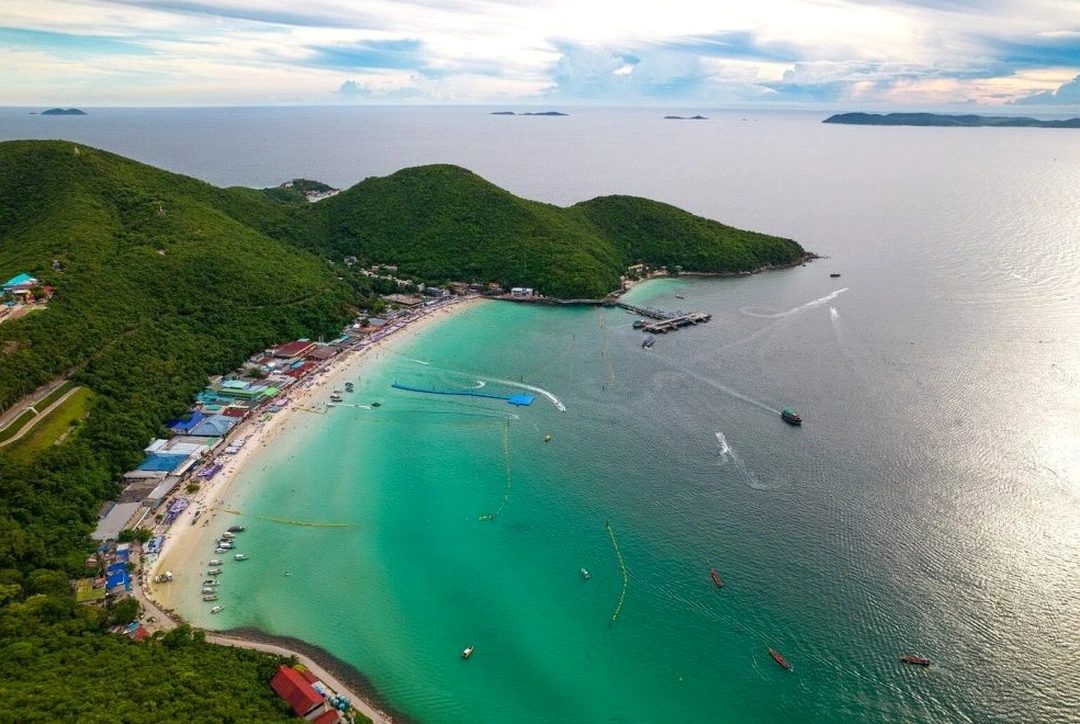
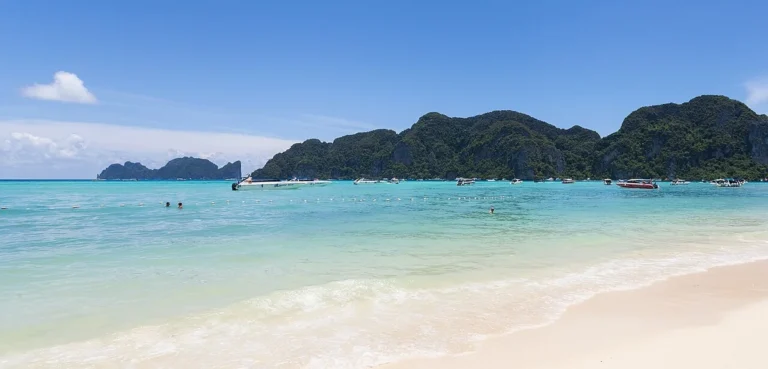
The dramatic contrast between dark, monolithic rocky ranges and open coastal shelves unlocks a priceless spatial landscape, whose grand centerpiece is Tawaen Beach at the island’s northernmost tip. Sweeping gently for over 750 meters in a graceful crescent facing the open sea, the sand at Tawaen is composed of countless finely crushed ancient coral fragments and silky quartz grains, boasting a rare, pure white hue that glistens brilliantly under the tropical sun. The sheltered crescent bay here acts like a colossal open-air swimming pool, neutralizing dangerous rip currents and producing crystal-clear optical water transparency.
Within this extraordinary bay, natural seawater circulation currents continuously filter out micro-silt, keeping the water a pellucid jade-green that allows clear visibility down to the sandy seabed and the thriving coral reefs beneath the submerged ledges. This tranquil, wind-sheltered basin topography and flat sandy shelf not only honor the island’s pristine marine ecology, but also provide an optimal natural foundation capable of welcoming between 5,000 and 10,000 day-trippers daily who flock here to experience some of the country’s most vibrant seaside excursions. The captivating scenery here stands as living proof of nature’s miraculous arrangement, harmonizing the grandeur of granite peaks with the gentle, poetic allure of white sands embracing blue seas.
Original human settlement spaces on Koh Larn originated from the deep indigenous wisdom of coastal dwellers along the Gulf of Siam, vividly expressed through the architectural form of “ruen khrueang sap” (เรือนเครื่องสับ)—traditional wooden stilt houses elevated gracefully on rows of timber columns. This specialized wooden pile foundation was not merely a technical defense against the island’s harsh low and high tidal ranges, but also a pinnacle of tropical microclimatic adaptation. The timber frame is joined entirely using precise traditional mortise-and-tenon joinery; the floorboards consist of thick-sawn natural timber planks spaced with micro-gaps that allow brisk sea breezes to circulate freely through every room, while steeply pitched roofs thatched with thick layers of nipa palm leaves extend generously over the verandas to deflect intense solar radiation and shed torrential monsoon rains rapidly. Clusters of family dwellings nestle organically along the gentle sea-facing hillsides, forming a serene fishing village spatial layout deeply bound to the ecological rhythm of the ocean.
Stepping into the modern era of coastal tourism, waterfront spatial planning at key bays such as Tawaen Beach and Na Baan Pier has been restructured using large-scale marine engineering solutions. Standing out against the jade-green water is a prestressed reinforced concrete pier stretching over 100 meters offshore, creating a sturdy berth where high-speed boats and large passenger ferries can dock safely without colliding with or damaging the shallow coral structures along the bay floor. Grounded in rigorous oceanographic studies of sediment transport dynamics, coastal engineers constructed a system of breakwaters integrated with gravity rock groynes. This submerged defensive line dissipates direct wave impact energy and regulates longshore currents to prevent mechanical erosion, preserving the smooth crescent of fine white quartz sand bordering the calm waters intact.
Alongside marine port infrastructure, the island’s hospitality and commercial spaces have been elevated through the architectural language of Tropical Modernism. At upscale resorts perched dramatically along steep granite cliffs, the boundary between man-made structures and natural wonders seems to dissolve entirely. Talented designers have skillfully blended local organic materials—including bamboo, reclaimed teakwood, and thick thatched roofs woven from dried cogon grass (หญ้าคา)—with expansive, large-span panels of transparent tempered glass. This open architectural approach delivers sweeping 360-degree panoramic views straight out over the vast Gulf of Thailand, maximizing natural convective airflow to reduce electricity consumption and crafting tranquil retreats where luxury comfort merges seamlessly with the untamed spirit of the sea.
Hidden beneath the airy elegance of these resorts lies a vital underground engineering marvel that solves the daunting challenge of freshwater supply on an isolated limestone island in the open ocean. Koh Larn’s smooth daily operation is secured via a high-pressure subsea water pipeline buried deep beneath the ocean floor, piping clean municipal water directly from mainland Pattaya across several nautical miles to the island. To complete its self-reliant spatial planning, the island also integrates advanced reverse-osmosis seawater desalination plants paired with compact freshwater reservoirs tucked cleverly into inland valley folds. This closed-loop utility network forms the invisible yet unshakable foundation that completes the standardized, sustainable spatial structure of a tropical island paradise.
As twilight hues of violet-blue sink slowly into the Gulf of Thailand, Coral Island (Koh Larn) sheds the bustling daytime energy of arriving speedboats and transitions into an entirely different, tranquil, and poetic nocturnal rhythm. Nightlife on the island centers primarily along the sweeping white sands of Tawaen Beach and the traditional settlement flanking Na Baan Pier. This spatial transformation unfolds gently, like a soulful, contemplative cadence out on the open sea, leading overnight travelers into a journey of visual artistry and authentic local cultural immersion rarely found elsewhere.
The first hallmark of Koh Larn’s nocturnal spatial design is a lighting philosophy rooted in absolute respect for nature. Unlike the dazzling, glaring neon spectacle of mainland Pattaya across the water, the resorts, beach bars, and open-air dining tables lining Tawaen Beach uniformly illuminate the shore with warm-white lighting accented by draped vintage festoon string lights. This gentle illumination fosters a romantic, peaceful ambiance while playing a crucial role in minimizing light pollution, preventing disruption to the biological behaviors of nearshore marine ecosystems and shallow coral reefs undergoing natural regeneration.
Within this serene setting, the voice of the ocean becomes the conductor of the island’s evening symphony. The soft murmur of lapping waves blends harmoniously with the rustic strumming of acoustic guitars, the mellow notes of a jazz saxophone, or laid-back lounge music drifting from timber beach shacks along the sand. Guests can sink effortlessly into beanbags placed right at the water’s edge, savoring freshly caught seafood grilled over glowing embers—fragrant with lemongrass and fiery Thai bird’s eye chilies—while feeling cool ocean breezes caress their skin.
The visual centerpiece captivating every gaze after dark is the breathtaking Fire Show performed by local artists right beside the surf. Each fluid, precise movement of the performers merges with the dance of flickering flames, transforming blazing torches into swirling ribbons of fire against the night sky. The climax of the performance features high-speed double fire-poi spinning and fire juggling combined with steel wool, sending thousands of glowing sparks cascading like a meteor shower onto the dark surface of the sea, creating a mesmerizing visual spectacle that leaves a lasting aesthetic impression.
Alongside contemporary evening entertainment, nightlife on Koh Larn is enriched with cultural depth thanks to the Chinese Art Museum nestled peacefully near the Na Baan area. This venue stands as a testament to the profound cultural exchange between overseas Chinese immigrants who settled along Thailand’s eastern seaboard and local island residents over generations. At night, the museum exudes a solemn, antique charm beneath traditional red lanterns, showcasing intricate sculptures, antique porcelain artifacts, and classical calligraphy. This harmonious bridge between nostalgic Eastern spirituality and carefree seaside relaxation paints a multifaceted portrait of Koh Larn after dark—at once quietly reflective and radiant with heritage.
The cuisine of Koh Larn is far more than simple seafood feasts catering to visiting travelers; it is the enduring continuation of Chonburi province’s coastal culinary heritage interwoven with the fishing traditions of eastern Thailand. Across generations whose livelihoods have risen and fallen with the tides, the local fishing community has distilled the Gulf of Thailand’s bounty into a distinctly indigenous culinary identity, where absolute freshness is the ultimate measure of every dish. As small wooden fishing boats pull ashore at dawn still glistening with sea salt, traditional fish markets and beachfront kitchens fire up their stoves, awakening the senses with the aroma of wood charcoal smoke, fresh herbs, and the rich pungency of artisanal fermented fish sauce.
At the pinnacle of the islanders’ heirloom repertoire is Gaeng Som Pu Khai Nor Mai Dong—spicy and sour curry with roe-filled sea crab and pickled bamboo shoots. This dish is a masterclass in Gulf-style Thai flavor balancing, featuring a vibrant orange-gold broth simmered from fresh chilies, turmeric, shallots, and pure Kapi shrimp paste, yielding a fiery base with a remarkably clean, refined finish. Plump sea crabs brimming with rich, nutty orange roe are chopped into generous pieces and simmered with crisp pickled bamboo shoots, releasing pure sweetness infused with gentle tanginess throughout every strand of crabmeat. Alongside it, Som Tam Pu Ma—green papaya salad pounded with raw blue swimmer crab—embodies the bold, uninhibited spirit of island cooking. Freshly netted blue crabs are cleaned, halved to expose their translucent, succulent flesh, and tossed in a wooden mortar with shredded green papaya, yardlong beans, cherry tomatoes, garlic, chilies, fresh lime, and pure fish sauce, delivering an explosion of flavor where zesty heat cuts all richness and elevates the natural sweetness of raw seafood.
A humble yet technically demanding icon on any Koh Larn dining table is the celebrated Khao Pad Pu, or blue crab fried rice. Fragrant jasmine rice is dried to just the right moisture level and tossed continuously in a blazing-hot, deep-bottomed cast-iron wok using high-heat searing technique to achieve its signature smoky wok aroma. The chef folds the rice gently so that pearly white, firm chunks of hand-picked blue crab meat remain intact rather than crumbling, mingling evenly with rich duck egg, finely sliced scallions, and a drizzle of Prik Nam Pla chili fish sauce before plating. The culinary map expands further with prized local shellfish, including thin-shelled raw oysters shucked on the spot and served with young lead-tree leaves, crispy fried shallots, and red chili sauce, or a plate of Hoi Chak Teen (dog conch) boiled with lemongrass and ginger to preserve its snappy crunch. Every boiled and steamed delicacy finds its soul in a bowl of emerald-green Nam Jim Seafood, a house-secret dipping sauce pounded from green bird’s eye chilies, single-clove garlic, cilantro roots, palm sugar, and pure key lime juice.
As sunset settles over the coral reefs, open-air charcoal grills begin wafting irresistible aromas of charred seafood, including sea tiger prawns, fresh cuttlefish, and sea bass crusted in coarse salt and roasted in banana leaves. The island’s culinary current is also a seamless gathering place for classic Thai dishes elevated by locally landed seafood, notably hot-and-sour prawn soup Tom Yum Goong brimming with young galangal, bruised lemongrass, and kaffir lime leaves, or a plate of Pad Thai stir-fried with fresh prawns and chewy rice noodles coated in tamarind-palm sugar glaze. Rounding out the sensory journey is the beloved dessert Khao Niew Mamuang—ripe, honey-sweet mango paired with sticky rice drizzled in thick coconut cream simmered with a pinch of sea salt—serving as a gentle bridge between the lush orchards of mainland Chonburi and the boundless flavors of the sea.
Coral Island (Koh Larn) welcomes travelers around the clock without charging any island entry fee, offering an open, accessible island sanctuary in the heart of the Gulf of Thailand. Even so, the liveliest tourism pulse along renowned beaches like Tawaen and the full lineup of water sports operate strictly between 8:30 AM and 5:30 PM daily. Once sunset fades and the final tourist boats depart the docks, the island returns to its innate, unspoiled serenity, where the unhurried pace of Na Baan fishing village harmonizes with waves lapping softly against granite headlands.
The sea crossing carrying travelers from bustling Pattaya to the white sands of Koh Larn departs from Laem Bali Hai Pier, jutting proudly into the bay in South Pattaya. At this busy terminal, visitors can flexibly choose between two water transport options offering completely contrasting moods. Traditional two-tier wooden public ferries, priced affordably at around 30 baht per trip, provide a leisurely, unhurried cruise cutting through the waves in roughly 45 minutes to dock at Na Baan Pier or head straight to Tawaen Beach. Meanwhile, high-speed boats skim across the water in just 15 to 20 minutes, delivering an exhilarating ride over white-capped swells and dropping passengers directly onto any scenic stretch of sand along their scheduled route.
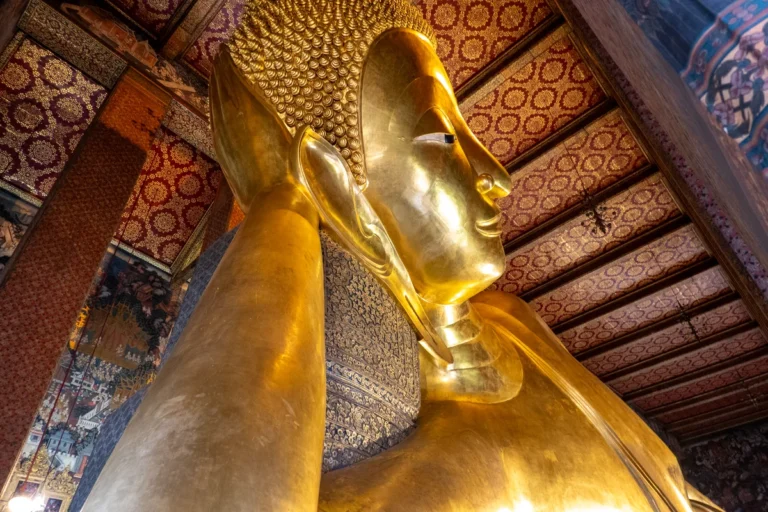
Stepping onto the island’s powdery shores, a local transport network opens up countless scenic routes winding through lush tropical hillsides. Open-air converted pickup trucks known as songthaews—welcoming brisk sea breezes—serve as the most familiar public transit, ferrying passengers from Na Baan Pier to all major beaches including Tawaen, Samae, Nual, and Tien at clearly posted fares per route. For free-spirited adventurers, daily self-drive motorbike rentals offer the ultimate way to set your own pace, conquering winding mountain passes up to hilltop viewpoints overlooking the vast ocean or visiting the revered temple housing a monumental Buddha statue gazing out over the sea.
Koh Larn’s marine playground truly comes alive through an array of thrilling water sports set against crystal-clear waters, with service rates varying by activity. Soaring high above the open sea on a wind-swept parasail or gripping the handlebars of a jet ski slicing through white surf rank among the most sought-after adrenaline rushes. Alongside them, bursts of laughter aboard high-speed banana boats, snorkeling excursions, and underwater sea-walking tours among colorful coral gardens complete an unforgettable day immersed in nature.
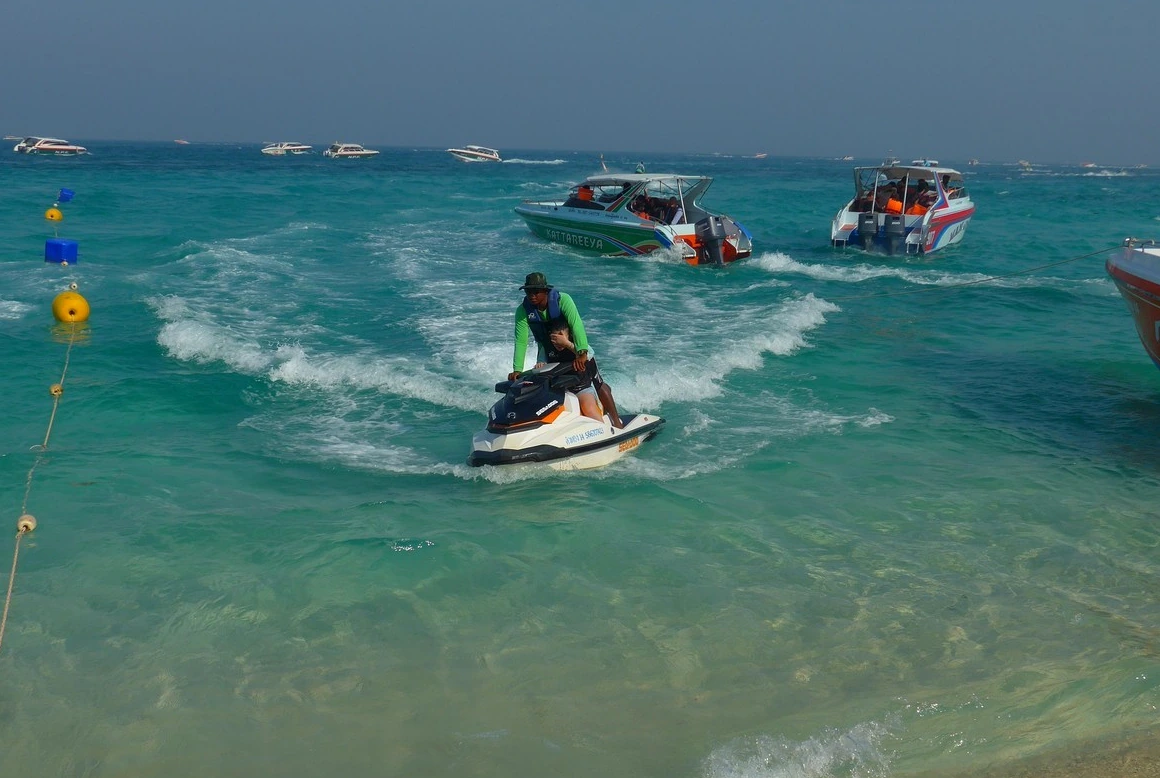
Hand in hand with the thrill of exploration comes responsible travel etiquette and a shared duty to protect the fragile marine ecosystem of the Gulf of Siam. Local authorities enforce strict conservation regulations: littering plastic waste or discarding cigarette butts on the sand or in the water is strictly prohibited, and visitors are firmly forbidden from stepping on, touching, or breaking natural coral reefs while swimming or snorkeling. Wearing a properly fitted life jacket and strictly following technical instructions from marine sports operators are essential rules for personal safety. To enjoy a seamless, worry-free getaway without having to coordinate ferry transfers or manage individual activity costs, travelers can explore all-inclusive Thailand tour packages for professional guidance and peace of mind throughout their journey.