The history of Bangkok’s train night markets did not begin with grand commercial urban planning, but rather from the nostalgic passion of one remarkable individual. Around 2010, Paisarn Palakul—a renowned art advisor and antique collector in the Land of Smiles—saw a hidden soul within the abandoned warehouses and rusted railway tracks managed by the State Railway of Thailand, tucked behind the legendary Chatuchak Weekend Market. Driven by the vision of creating a gathering space for vintage enthusiasts to trade time-worn mechanical relics, classic cars, and twentieth-century Western automotive parts, Paisarn Palakul laid the earliest foundations for Talad Rot Fai, or the Train Market. That original space exuded a raw, rustic charm—at once ruggedly weathered and steeped in the poetic spirit of a Bangkok rapidly transforming amid waves of modernization.
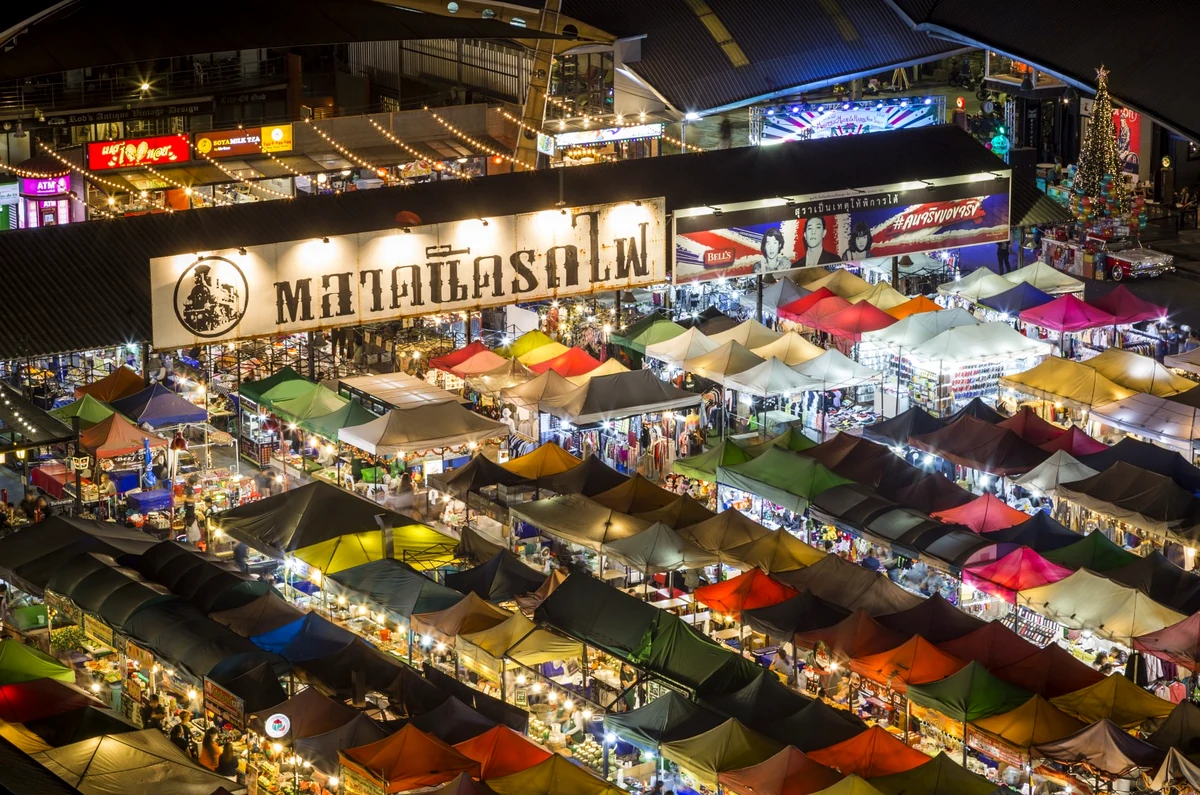
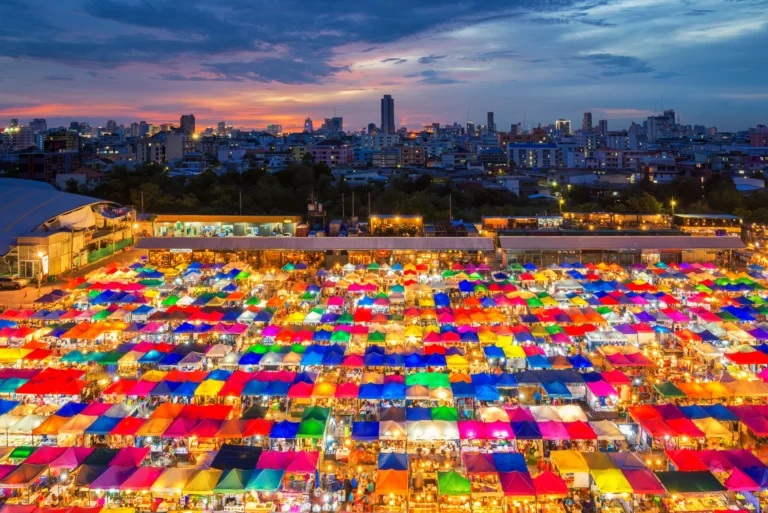
As urbanization accelerated and the underground transit network expanded, the original site at Chatuchak had to be returned for infrastructure development. Yet the spirit of the train market did not fade; instead, it embarked on a spectacular migration. First, the market relocated to Srinakarin Road in the southeastern suburbs on a massive scale, recreating a veritable open-air museum of pop-art culture, vintage fashion, and local cuisine. Soon after, a dazzling and prime branch was established in Ratchada, nestled right behind the Esplanade shopping mall. Here, Talad Rot Fai Ratchada became a global visual phenomenon with hundreds of neon-hued canvas tents glowing through the night—an iconic emblem of Thailand’s nighttime economy where millions of international travelers converged in search of authentic street food and endless urban energy.
However, the upheaval of the global pandemic dealt a devastating blow to the Kingdom of Thailand’s entire tourism industry. Prolonged lockdowns and the complete absence of foreign visitors left the once-illustrious Ratchada night market desolate, forcing it to officially lower its canopies and close indefinitely. The disappearance of this nocturnal cultural icon left a deep sense of loss among Bangkok residents and globetrotters alike. Many feared that the golden era of railway-inspired night markets had ended forever in the wake of that severe economic crisis.
Yet under the reign of King Rama X, Maha Vajiralongkorn, the enduring vitality of Bangkok’s night market culture rose once again from the ashes. Behind this landmark revival stood businesswoman and property developer Pairote Roikunthee, who had played a pivotal role in operating and shaping the original Talad Rot Fai markets. Deeply aware that merely replicating the old formula would not resonate with post-pandemic travel sensibilities, Pairote Roikunthee orchestrated a complete reinvention. In November 2021, the Jodd Fairs brand was officially launched in the Phra Ram 9 district, right at the heart of Bangkok’s bustling new central business district, opening a brand-new chapter for the train night market legacy.
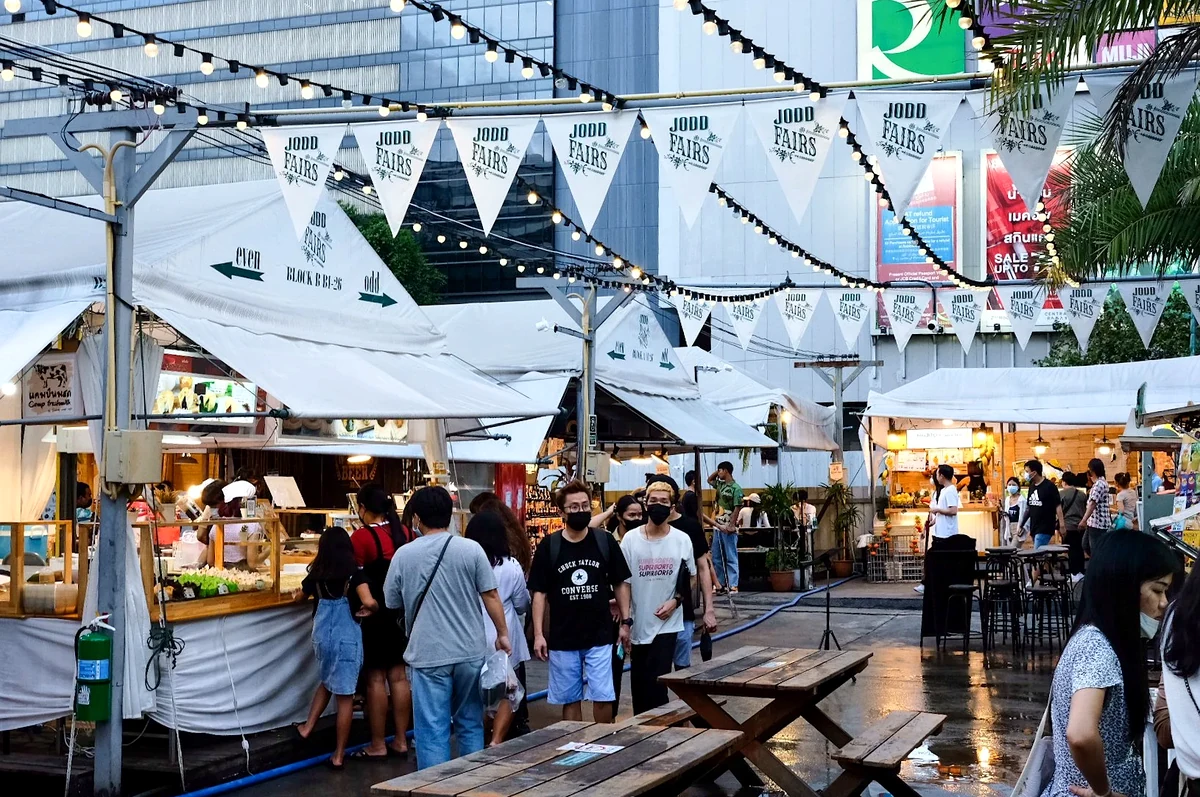
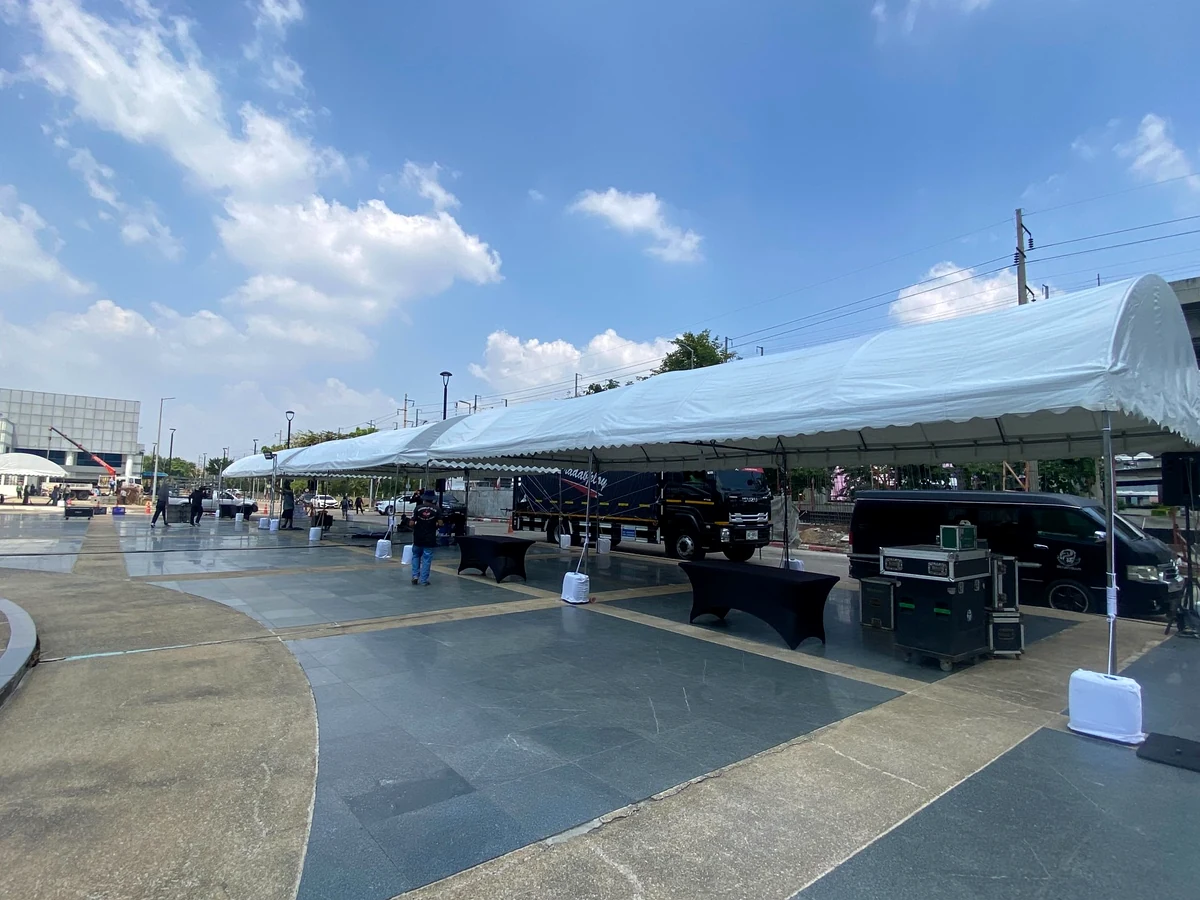
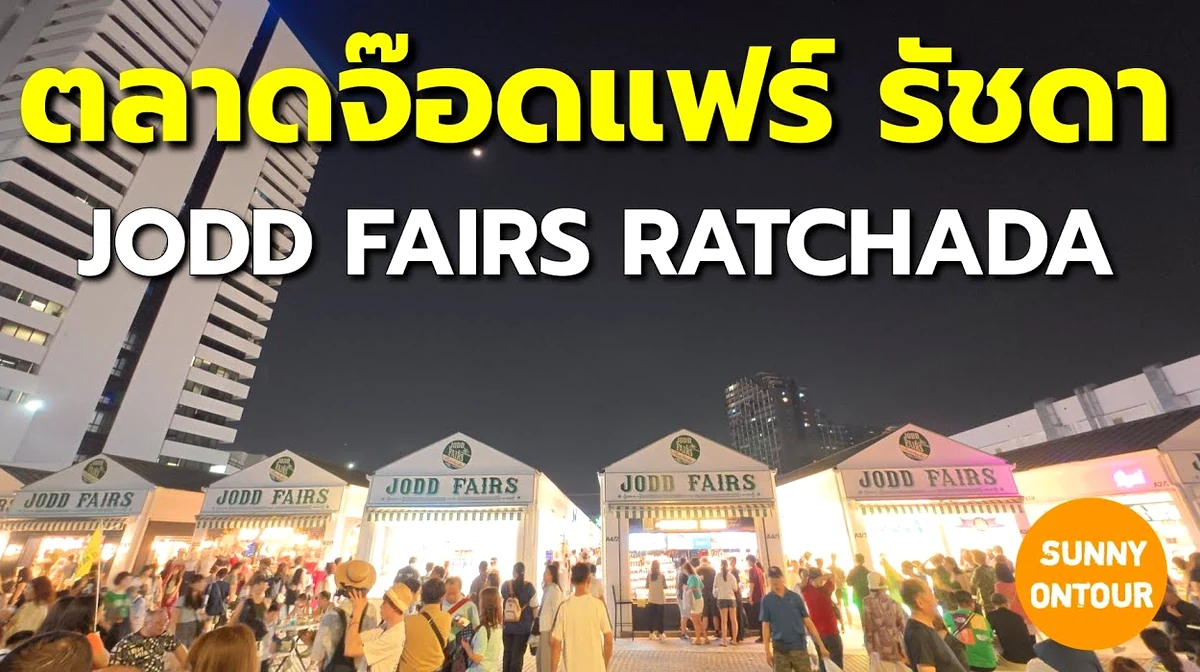
The evolution from traditional Talad Rot Fai to Jodd Fairs reflects extraordinary intuition in adapting to changing times. The name “Jodd”—originally derived from an insider slang term among antique dealers—was reborn with a sleek, refined, and minimalist identity. The bright, retro-colored tarps of decades past were completely replaced by uniform, crisp white canopies, creating an open-air ambiance reminiscent of a Nordic outdoor festival. Under Pairote Roikunthee’s creative direction, Jodd Fairs honors the flame of its train-market heritage through vintage automobiles displayed as visual centerpieces while speaking directly to the aesthetic tastes and lifestyle of Gen Z worldwide. This transformation not only rescued the livelihoods of hundreds of traditional vendors, but also redefined the standard for modern night markets: civilized, spotless, and trendy while preserving the timeless street identity of Siam.
Viewed through the lens of contemporary urban feng shui, the night market commands an impressive footprint on a rare prime parcel spanning over 33,000 square meters (equivalent to 33 rai in traditional Siamese land measurement), anchored right at the epicenter of Phra Ram 9’s explosive growth in Bangkok. Positioned adjacent to the strategic intersection of arterial Ratchadaphisek Road and Phra Ram 9 Road, the site embodies a “twin dragons converging” layout, where foot traffic and urban energy circulate continuously from morning until midnight. Beyond its auspicious rectangular footprint, the location is powerfully supported by a multi-tiered transit network connecting directly to the elevated Sirat Expressway and the MRT Blue Line via Phra Ram 9 Station. This integrated infrastructure acts like vital arteries channeling tens of thousands of visitors every evening, creating a thriving commercial hub brimming with prosperity in the heart of the Land of Smiles’ new business district.
In stark contrast to its predecessor Talad Rod Fai Srinakarin—known for its wild, spontaneous layout—the site plan here is a model of modern urban spatial organization. The entire 33-rai grounds are meticulously arranged on a symmetrical grid, clearly demarcating wide internal walkways to ensure smooth pedestrian flow and eliminate bottlenecks even during peak hours. Underground utilities were engineered to high standards, featuring a rapid stormwater drainage network built for Bangkok’s intense tropical monsoon climate, alongside dedicated grease-trap manholes lined densely throughout the food zones to uphold strict environmental hygiene. Electrical wiring and lighting cables are routed underground or enclosed in industrial conduits, eliminating fire hazards around open charcoal grills while keeping the overhead vista clean and airy beneath rows of uniform white tents.
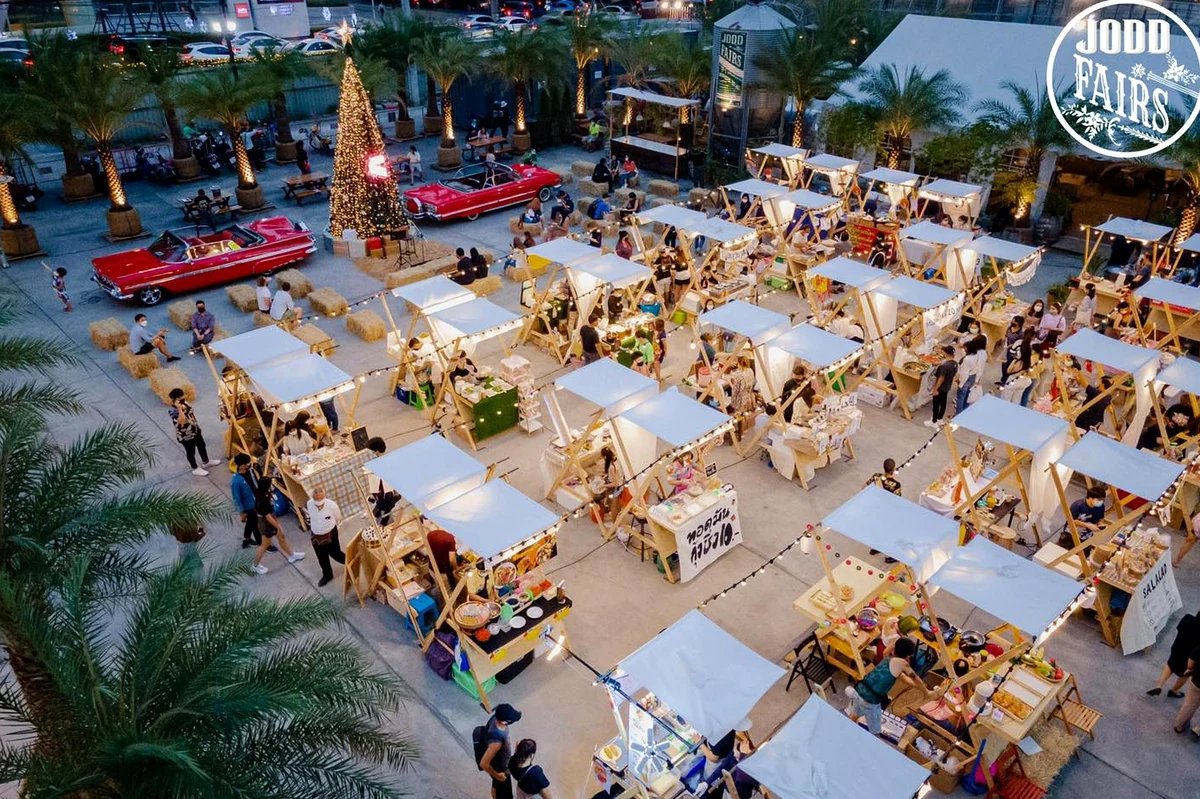
The market’s signature landscape is a harmonious symphony of contemporary minimalist architecture and classic Western nostalgia. Rejecting the chaotic, clashing colors of traditional market tarps, the visual aesthetic is unified by the pure white of hundreds of tent stalls, creating a soft, pleasing glow under warm yellow lights after dark. Dotted among the bustling food lanes are tall palm trees swaying in the breeze, evoking the breezy vibe of a tropical coastal resort. Original 1960s vintage vehicles—such as Volkswagen Beetles, classic Ford pickup trucks, and finely restored metal locomotive sculptures—serve as prized visual focal points paying homage to the market’s railway roots. The thoughtful interplay of landscaped setbacks, open-air tent architecture catching natural breezes from Ratchadaphisek Road, and fragrant plumes of steam rising from towering spicy pork spine platters creates a one-of-a-kind nocturnal culinary culture—chic and orderly, yet brimming with the authentic pulse of everyday Thai street life.
Stepping across the threshold from bustling Rama 9 Road into Jodd Fairs’ three-hectare grounds, travelers immediately experience a striking visual dialogue between futuristic city rhythms and nostalgic charm. Inheriting the DNA of the famed suburban Talad Rot Fai markets, this night market’s aesthetic has been refined and elevated into an architectural ensemble rooted in Industrial Vintage style, softened by the sleek minimalism of a new era. The thirty-thousand-square-meter expanse feels like an open-air creative factory, where angular, rugged steel structures are artfully repurposed into evocative cultural touchpoints.
The most distinctive hallmark of the design language here is the creative upcycling of corrugated steel shipping containers. Rather than leaving them raw and rusted like dockyard logistics boxes, Bangkok’s urban designers coated their metallic surfaces in gentle pastel shades—ivory white, soothing mint green, smoky gray, and dusty blush pink. This softening of industrial materials not only dispels the visual heaviness of massive steel blocks, but also creates an ideal optical backdrop that makes hundreds of surrounding stalls pop with color. Above the rows of kiosks, crisp white peaked canopies are tensioned in tidy formation, forming an undulating sea of roofs engineered to capture natural convection breezes and vent the humid tropical heat of Siam.
The night sky over Jodd Fairs is draped in an elaborate lighting canopy reminiscent of mid-twentieth-century European street festivals. Thousands of warm amber Edison filament bulbs are strung into an intricate overhead web stretching down herringbone walkways. As darkness falls, this gentle illumination blends with glowing artistic neon signs, reflecting off polished vintage car paint and metallic tabletops to create an enchanting visual realm steeped in both retro warmth and youthful energy.
The market’s spatial planning showcases remarkably logical, scientific zoning that shatters every stereotype of chaotic Southeast Asian night markets. The central spine is a spacious culinary promenade lined with long rustic timber dining tables paired with powder-coated steel stools. This open-air layout allows billowing steam and rich aromas from towering Leng Saap spicy pork spine platters or sizzling chili seafood on cast-iron skillets to disperse effortlessly upward, keeping the atmosphere fresh and comfortable.
Moving deeper toward the rear perimeter lies the fashion, handmade crafts, and indie accessories zone curated by young Thai designers. Here, the tempo slows down among stalls built from reclaimed pinewood, neatly displaying handcrafted leather goods, intricate silver jewelry, and curated vintage apparel. Tucked into the quietest corner is a pop-up craft beer lounge, where vintage 1960s Volkswagen Kombi vans have been converted into stylish mobile bars. Repurposed steel oil drums double as standing tables for sipping craft brews, completing a space that feels both free-spirited and artistically rich—transforming a commercial market into one of Bangkok’s most distinctive street-culture installations.
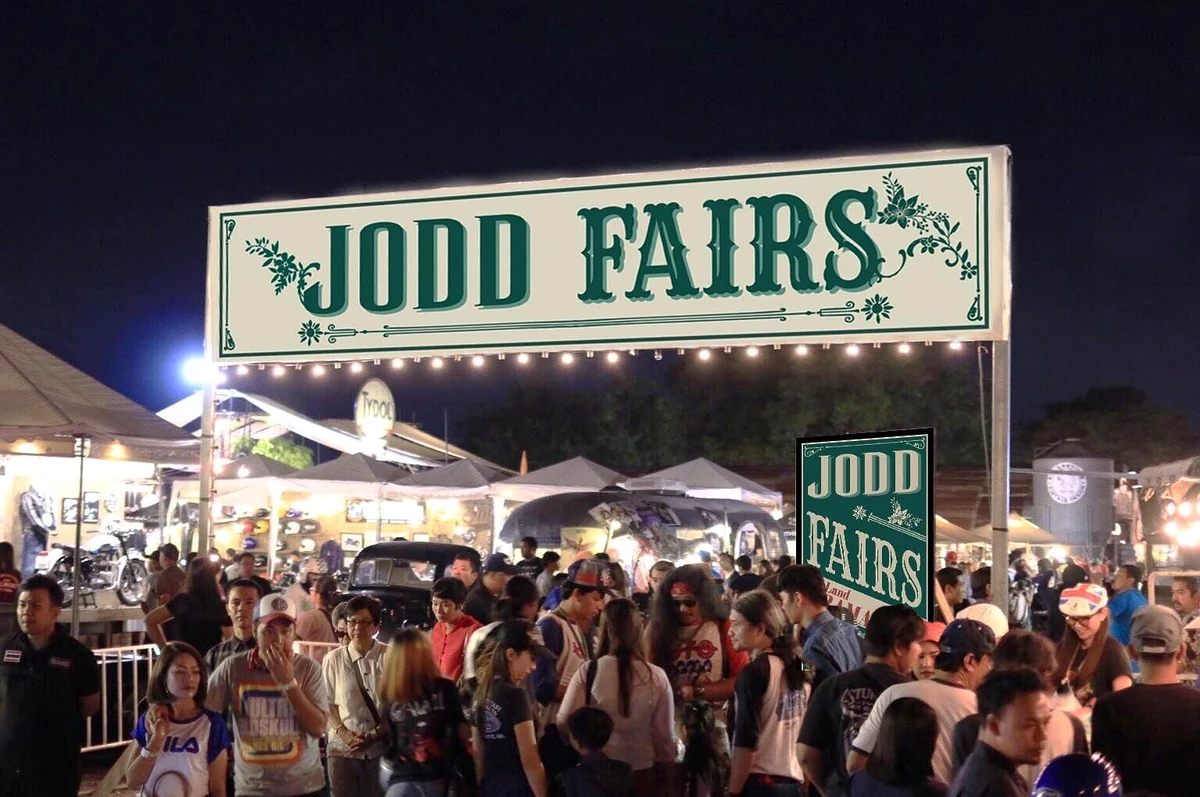
As twilight drapes a deep indigo hue across Bangkok’s modern skyscrapers, the heartbeat of Jodd Fairs awakens like a colossal live stage in the middle of the metropolis. Far more than a commercial stopover, it is a vibrant fusion of light, sound, and flavor where Thai night market culture is elevated into a captivating popular art form. Stepping through the market gates at dusk, visitors are instantly swept into an electric atmosphere where the boundary between busy everyday routines and festive celebration melts away.
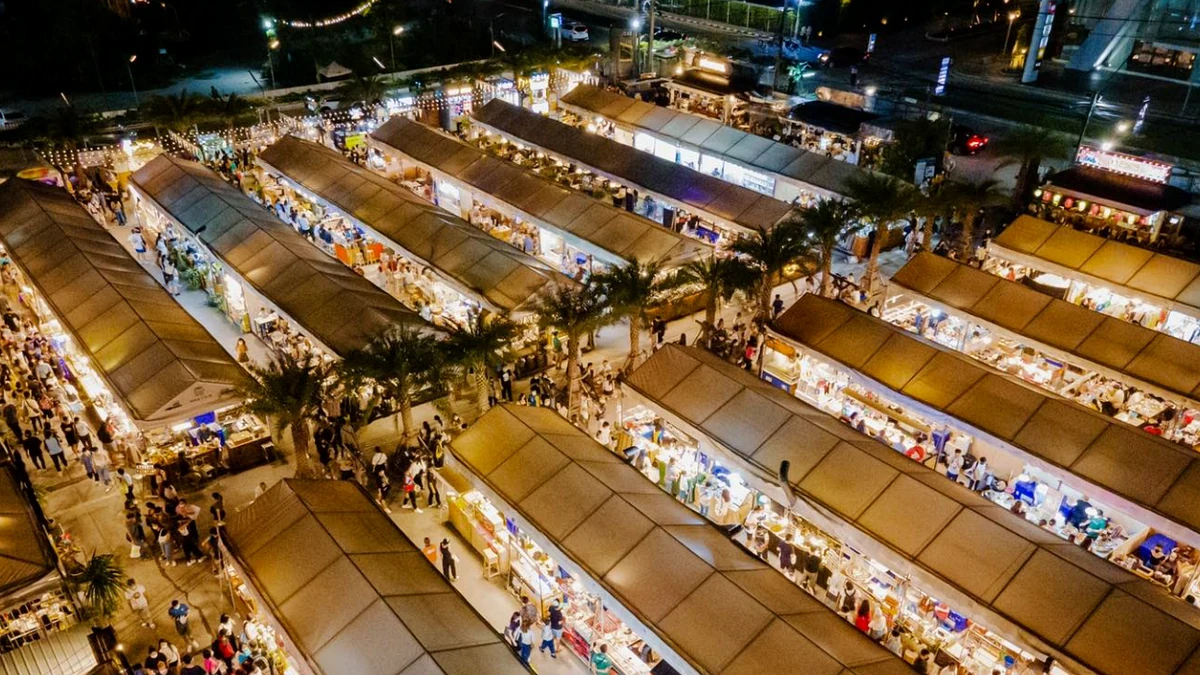
Visual artistry at Jodd Fairs is defined by the refined contrast between rows of uniform white canvas tents and a meticulously layered lighting design. Suspended overhead is a network of thousands of warm yellow filament bulbs, woven like artificial Milky Ways above wide brick-paved walkways. Viewed from above, the entire night market complex resembles a luminous oasis—simultaneously evoking nostalgia for the old Talad Rot Fai train market and radiating the sleek sophistication of a contemporary entertainment venue. That flattering, gentle glow not only showcases the vibrant appeal of tightly packed stalls, but also provides a picture-perfect backdrop that turns every narrow lane into a cinematic snapshot.
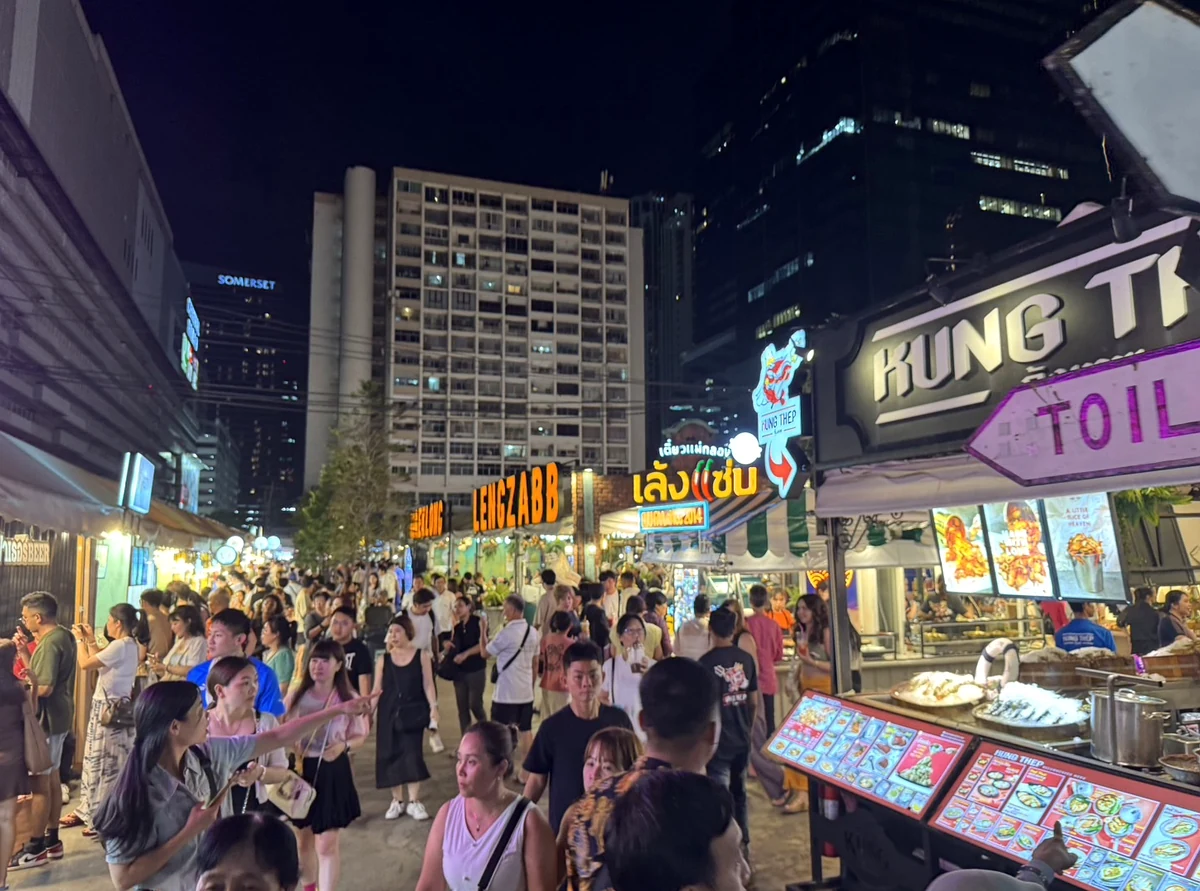
During peak hours from 18:00 to 23:00, the market reaches a sensory crescendo as wisps of smoky haze rise from hundreds of open kitchens. Glowing charcoal smoke mingles with the heady fragrance of fresh lemongrass, kaffir lime leaves, and fiery prik kee noo bird’s-eye chilies bubbling atop giant spicy pork spine towers, blending seamlessly with the savory richness of scallion-oil grilled seafood and sweet coconut mango sticky rice. Refracted through countless clusters of round bulbs, this culinary mist creates an ethereal stage-curtain effect framing the theatrical cooking skills of street artisans. The sizzle of fat on red-hot cast-iron pans, the rhythmic clatter of cleavers on chopping boards, and mouthwatering aromas drifting on the night breeze awaken every sense.
Woven into this colorful culinary tapestry are the raw, soulful acoustics of live bands performing at open-air lounge corners. Warm acoustic guitar chords, upbeat cajon drum rhythms, and expressive vocals covering Thai indie favorites and familiar international ballads infuse the air with relaxed, free-spirited energy. Thoughtfully designed seating zones featuring rustic wooden tables, casual folding chairs, and retro open-air bars invite diners to kick back with an ice-cold beer or herbal cocktail while soaking in the music. Watching thousands of people from every culture gather side by side, clinking glasses under a canopy of honey-gold lights and singing along to every chorus, turns Jodd Fairs into a borderless cultural crossroads.
The nocturnal pulse at Jodd Fairs only begins to wind down past 23:00, yet the lingering magic of an evening filled with sights, sounds, and flavors stays etched in memory. The seamless harmony of lighting design, iconic street food rhythms, and warm social camaraderie creates a complete sensory experience that captures the free-spirited, hospitable, and vibrant soul of the Land of Smiles after dark.
The moment sunset fades behind Bangkok’s sleek skyscrapers, Jodd Fairs transforms into a fiery culinary boulevard where traditional Siamese flavor profiles merge with contemporary urban energy. Rather than a mere pit stop to refuel after a long day of sightseeing, this space is a living encyclopedia of Thai street food culture. Beneath neat rows of pure white canopies, open kitchens blaze continuously, sending up fragrant clouds carrying the sharp heat of bird’s-eye chilies, the bright aroma of lemongrass, galangal, and kaffir lime leaves, and the deep umami of artisanal fish sauce. Every corner of this night market invites an exciting culinary adventure, embodying Thailand’s signature philosophy of balancing four essential taste notes: bright sourness, fiery spice, savory saltiness, and lingering sweetness.
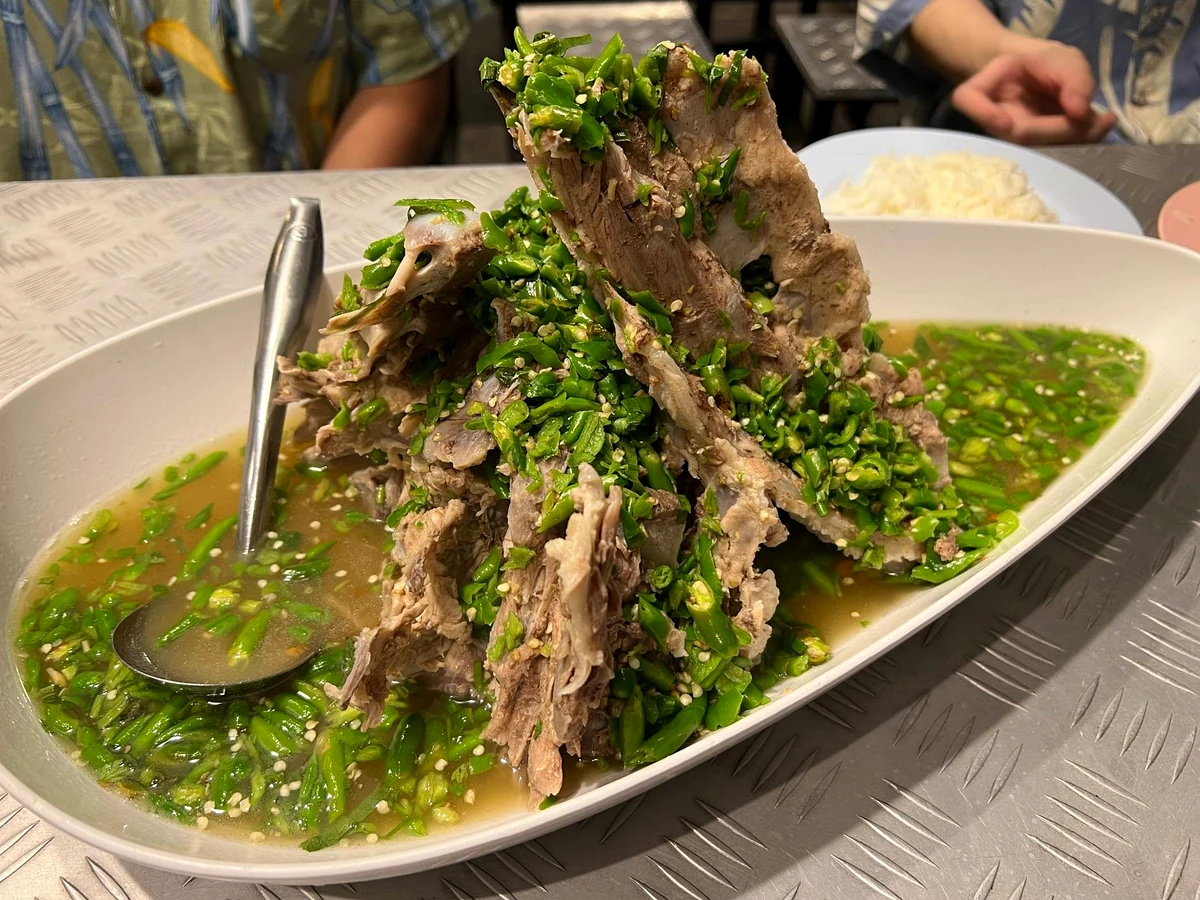
Reigning supreme at the pinnacle of Jodd Fairs’ culinary map is the Giant Spicy Pork Spine Tower, known locally as Leng Saap. Carefully selected pork backbones and ribs are simmered for hours in a sweet, clear bone broth infused with aromatic herbs until the meat reaches melt-in-the-mouth tenderness, falling effortlessly off the bone at the slightest touch. When ordered, hefty meat-laden bones are artfully stacked into a towering mountain inside a deep oval platter and ladled generously with fiery, crystal-clear broth. The showstopping visual and flavor highlight is a thick blanket of finely chopped green Prik Kee Noo bird’s-eye chilies covering the mound like lush emerald moss. Eating Leng Saap is a communal, hands-on ritual: diners slip on plastic gloves and pull apart juicy strips of meat bursting with bright fresh lime acidity, searing green-chili heat, and deep, rich marrow sweetness.
Continuing this fiery flavor journey is Kung Chae Nam Pla, the celebrated raw shrimp in fish sauce dish that showcases coastal Thailand’s refined mastery of fresh seafood. Fresh tiger prawns are meticulously peeled, butterflied along the back, and kept ice-cold to preserve their natural crispness before being bathed in a pungent marinade of premium first-press fish sauce, crushed garlic, red chilies, and fresh lime juice. Each prawn is topped with a thin slice of bitter melon and a crisp mint leaf, orchestrating a thrilling symphony of contrasts: an initial hint of bitterness quickly yields to the sweet, snappy crunch of chilled shrimp before erupting into sharp chili heat and cooling herbal freshness that completely banishes any trace of fishiness.
To soothe the palate after waves of bold, fiery spices, the night market leads diners into a world of sweet treats, headlined by poetic Rainbow Mango Sticky Rice. Crafted from plump, round-grain glutinous rice soaked and steamed with natural extracts of pandan leaf, butterfly pea flower, or gardenia fruit, the grains take on vibrant, all-natural hues celebrating tropical abundance. Glossy, chewy rice is drizzled generously with rich coconut cream simmered with a pinch of pure sea salt for savory balance, plated alongside honey-sweet, golden slices of ripe Nam Dok Mai mango and a sprinkle of crunchy roasted mung beans. Meanwhile, street-side refreshment is championed by oversized buckets of Thai Milk Tea packed with crushed ice. Blending robust, astringent Assam red tea with creamy condensed milk and chewy jellies inside a novelty handled bucket, it delivers instant relief from the tropical humidity while serving as an iconic symbol of youthful, carefree dining at this famed nocturnal food haven.
To experience the full sensory feast of Bangkok’s premier night market without hassle, timing your visit right is the key to a seamless outing. Jodd Fairs typically fires up its grills and switches on its lights from 16:00, keeping the energy alive until midnight every day of the week. Even so, the undisputed golden window to arrive is between 17:00 and 18:30. This is when twilight settles over Rama IX Road, evening breezes cool the tropical warmth, and rows of uniform white tents begin glowing under warm golden lights. Arriving during this window lets you capture dreamy photos where natural dusk blends with market lights, while effortlessly securing prime seating at popular Leng Saap pork spine or giant spicy seafood stalls before massive crowds pack the aisles.
Central Bangkok’s road network is notorious for hours-long traffic gridlock, making your choice of transport to Jodd Fairs crucial to your overall experience. The fastest, most budget-friendly, and punctual way to arrive is via the MRT subway system. Simply ride the MRT Blue Line to Phra Ram 9 Station, take Exit 2 leading directly into the basement level of Central Plaza Grand Rama 9, and walk through the mall atrium or follow directional signs behind the building for a couple hundred meters until the dazzling lights of the night market appear right ahead. For travelers coming from Sukhumvit or Siam, taking the BTS Skytrain to Asok Station and transferring to MRT Sukhumvit Station for a quick two-stop ride to Phra Ram 9 offers the smoothest route—completely bypassing rush-hour taxi and tuk-tuk traffic jams.
Pricing at Jodd Fairs spans a remarkably accessible spectrum that matches the quality and trendy dining atmosphere on offer. With a budget of around 500 to 1,000 Baht per person, you can enjoy a lavish culinary tour from savory starters to sweet desserts. Classic street snacks like juicy Moo Ping grilled pork skewers, crispy banana Roti pancakes, or a refreshing cup of Cha Yen Thai milk tea typically cost a budget-friendly 40 to 80 Baht. More elaborate signature dishes like the famous Leng Saap spicy pork spine tower are priced by size, ranging from a small-group Size M platter at roughly 180 to 250 Baht up to a towering XXL feast reaching 600 to 700 Baht. Meanwhile, stir-fried spicy seafood stalls, Goong Ten dancing shrimp, or fresh prawn Som Tum papaya salads generally fall between 150 and 350 Baht depending on ingredients.
Thoughtful preparation of both cash and attire will make your visit to Jodd Fairs far smoother. While most modern food stalls and fashion boutiques readily accept QR code payments via PromptPay and linked international e-wallets, carrying a sensible stash of small-denomination Thai Baht notes—such as 20, 50, and 100 Baht bills—remains essential. Many traditional pushcarts and small drink stands struggle to break large 1,000 Baht banknotes amid fast-moving queues. Additionally, given the market’s expansive footprint with hundreds of stalls packed along paved and gravel walkways, wearing cushioned sneakers or flat sandals alongside breathable, sweat-wicking cotton clothing will keep your feet comfortable through hours of exploring.
Jodd Fairs Train Night Market is far more than a casual dining hotspot; it is a vibrant cultural snapshot capturing the modern, youthful, and creative pulse of today’s Bangkok. To savor every flavorful moment of Thai street food culture at a relaxed pace—without worrying about currency exchange, navigating rush-hour transit, or running into language barriers—joining an all-inclusive Thailand tour package ensures a seamless, safe, and unforgettable journey from start to finish.