Set along the eastern shore of the Gulf of Siam, the coastline of Pattaya was once nothing more than a tranquil fishing village tucked behind wild coconut groves before the sweeping tides of the late twentieth century transformed it into the most vibrant entertainment hub in the Land of Smiles. Amid a dynamic confluence of Eastern and Western cultures, this coastal enclave witnessed the birth of an unprecedented theatrical art form: transgender cabaret revue. Rising above the harsh prejudices of the era, the emergence of two dazzling sanctuaries—Tiffany and Alcazar—is far more than a story of expanding tourist attractions; it is a proud epic chronicling the journey into the spotlight, the affirmation of identity, and the artistic transcendence of Thailand’s transgender community.
The pioneering spark was ignited in 1974 in South Pattaya by Mr. Chalermpholtiwong, a legendary figure revered by posterity as Madam Tiffany. Starting in a cramped seaside room with a modest troupe of just three talented performers, the earliest steps of Tiffany’s Show reimagined Western musical masterpieces with burning passion and extraordinary finesse. The first rounds of applause echoing through the coastal night quickly rippled outward, generating acclaim far beyond expectations. By 1978, realizing that the original venue could no longer accommodate the growing devotion of visitors from near and far, Madam Tiffany made a landmark decision to relocate the entire troupe to bustling Pattaya Second Road. There, a grand theater seating up to 1,000 guests was erected, marking the moment transgender performance art was elevated into a large-scale entertainment institution—playing a trailblazing role in legitimizing and celebrating the artistry of the LGBTQ+ community across all of Southeast Asia.
Pattaya’s journey toward undisputed supremacy was etched even more boldly on November 8, 1981, when the velvet curtains of the Alcazar Cabaret Show officially rose. This milestone unfolded during the reign of the Chakri Dynasty and the premiership of Prime Minister Prem Tinsulanonda—a period when Thailand entered an era of openness, political stability, and vigorous foreign economic expansion. In its early days, Alcazar Cabaret was an intimate 350-seat auditorium focusing on lavish Las Vegas-style revue seamlessly blended with Asian folk melodies and classical legends. Despite its modest initial footprint, impeccable jeweled costumes, the regal grace of its performers, and masterful physical technique immediately established an artistic counterweight worthy of its older counterpart, Tiffany.
The following decade witnessed a fascinating race in aesthetics and audiovisual technology between these two cultural icons. In 1990, Alcazar Cabaret launched a sweeping infrastructural revolution, demolishing its old auditorium to construct a monumental 1,200-seat theater complex crowned with majestic domed architecture. To deliver an utterly spellbinding experience for global audiences, the venue pioneered the integration of advanced DTS digital surround sound alongside cutting-edge computer-controlled lighting systems—the most sophisticated in the region at the time. The harmony of visionary staging, ethereal illumination, and an exceptionally gifted cast transformed Pattaya’s cabaret shows into a living heritage where history, humanist culture, and world-class entertainment converge as one.
Positioned along the eastern coast of the Gulf of Thailand, Pattaya rests on a gentle plain sloping gradually from lush green hills in the east down to the open surf along its western shore. Viewed through the traditional landscape feng shui of the Indochinese peninsula, this topography embodies the auspicious “backed by mountains, facing the sea” configuration—where low hills behind act as a protective anchor, while the vast, calm expanse of the gulf in front serves as an open courtyard welcoming cool breezes and abundant prosperity. From a coastal fishing village that once bore the footsteps of King Taksin the Great as he marched his troops eastward during the eighteenth-century Ayutthaya crisis, this land has blossomed into Southeast Asia’s premier tourism powerhouse, where the Alcazar and Tiffany theaters reign proudly like radiant jewels casting brilliant light out toward the ocean.
In terms of inter-regional spatial planning, Pattaya’s cabaret sanctuaries enjoy exceptionally strategic connectivity. Located just 147 kilometers southeast of the capital Bangkok, travel time for visitors has been dramatically shortened via the arterial Motorway Route 7. This modern multi-lane expressway allows vehicles to glide smoothly in roughly one and a half to two hours past palm plantations, shrimp farms, and the bustling industrial seaports of Chonburi Province. This integrated infrastructure is further reinforced by nearby U-Tapao International Airport and a planned high-speed rail line linking Thailand’s three major international airports, making the journey to these nocturnal visual extravaganzas more effortless and leisurely than ever.

Moving deeper into the city’s urban grid, Pattaya Second Road—locally known as Thanon Sai Song—emerges as the primary circulatory artery of North Pattaya. Running parallel to and just a few hundred meters back from the shoreline, this thoroughfare is served day and night by an ceaseless stream of iconic two-row songthaew pickup taxis. These brightly colored open-air vehicles ferry travelers from the tranquil resorts of Jomtien Beach in the south, right past the legendary, neon-soaked Walking Street, and drop them directly at the grand forecourts of both theaters. An intelligent grid of radial lanes linking Second Road to the beachfront Pattaya Beach Road ensures smooth crowd distribution, eliminating gridlock even during peak evening hours when thousands of spectators converge simultaneously for sunset and late-night performances.
Inside the theater grounds, spatial engineering is meticulously calibrated to optimize world-class artistic appreciation. The auditoriums of both Alcazar and Tiffany are designed on the model of classic Western opera houses combined with a gently terraced semicircular slope, guaranteeing unobstructed sightlines for over a thousand plush velvet seats. At the heart of each venue lies a heavy-duty hydraulic multi-tiered revolving stage paired with technical lift compartments capable of transforming the setting from a gilded Siamese royal palace to the imposing Forbidden City in a split second. Orchestrated by a digital stereo sound console and hundreds of multi-axis intelligent moving lights, the entire space morphs into an enchanting visual realm where low-lying fog, mechanical water curtains, and laser effects blend seamlessly with graceful choreography—creating an unforgettable artistic crescendo in the hearts of travelers from across the globe.
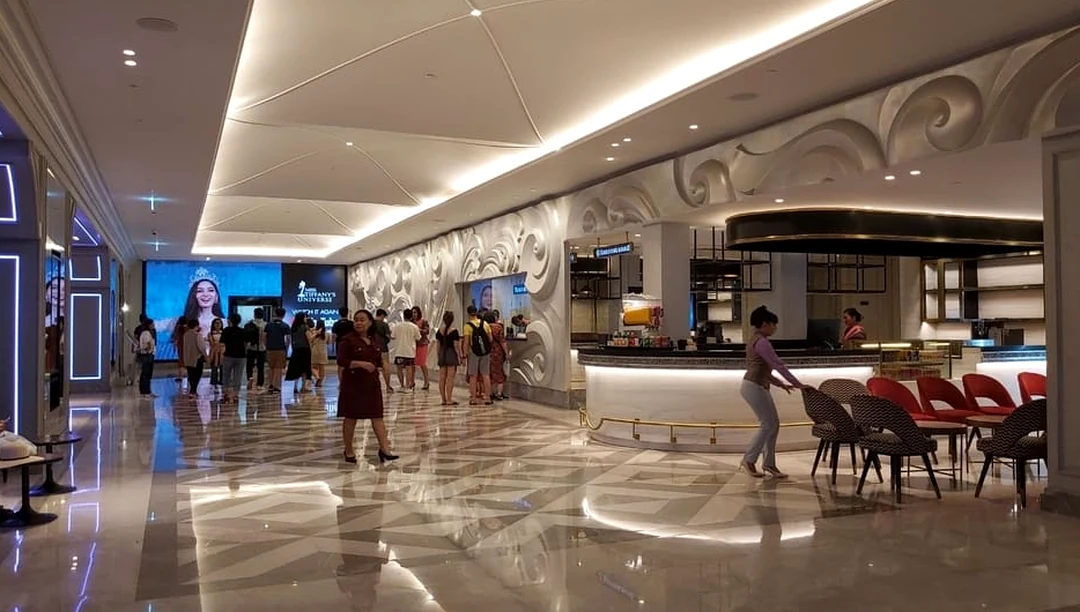
Stepping across the threshold of Tiffany’s Show on Pattaya Sai Song, aficionados are immediately captivated by an opulent lobby where the finesse of French Renaissance palace architecture merges effortlessly with crisp contemporary design. White marble-clad walls trimmed with gilded moldings and soaring ceilings supporting multi-tiered Bohemian crystal chandeliers cast an ethereal glow, composing a regal overture before the stage curtains even part. Tiffany’s main auditorium is laid out like a classic Western opera house with a benchmark capacity of 1,000 seats arranged along a smartly sloped semicircle, ensuring panoramic, blind-spot-free visibility from every seat in the house.
Tiffany’s grandeur extends far beyond its aesthetic facade, elevated by an underground technical revolution backstage. At the core of this performance sanctuary is a colossal, ultra-high-resolution curved LED wall wrapping the entire depth of the stage to dissolve the boundary between reality and illusion. Working in lockstep is state-of-the-art 3D laser projection mapping capable of shifting instantaneously from the gilded spires of ancient Ayutthaya to the imperial majesty of Beijing’s Forbidden City or the electric pulse of Broadway in the blink of an eye. Multi-level hydraulic stage lifts and automated mechanical tracks operate with the precision of a Swiss timepiece, swapping multi-ton scenic sets in complete silence without ever breaking the audience’s emotional immersion.
Just a short distance away, its worthy rival Alcazar Cabaret embraces a design philosophy defined by functional innovation and twenty-first-century scale. Seating up to 1,200 guests, the Alcazar auditorium takes on the commanding presence of a modern artistic arena, featuring an ideal rake modeled on a Roman amphitheater. Alcazar’s technical crowning achievement lies in its investment in a multi-channel Dolby Surround sound system built to international recording-studio standards, completely redefining acoustic expectations for Southeast Asian revue theaters. Every resonant bass swell in a symphonic overture, every crystalline vocal note of a Russian folk ballad, and every driving beat of contemporary K-Pop is separated and acoustically positioned with pinpoint accuracy to strike straight at the emotions of every spectator across the vast hall.
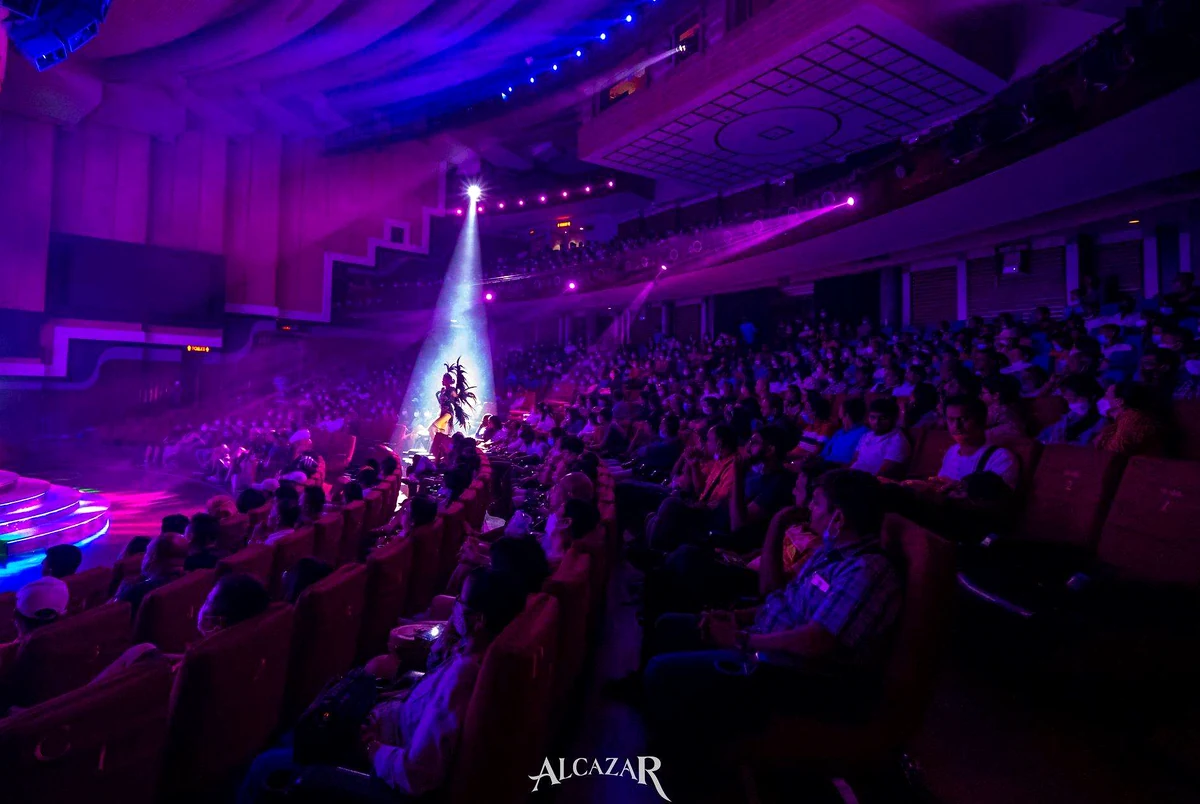
Beholding these two entertainment capitals, one cannot help but marvel at their extraordinary costume craftsmanship—a pinnacle of Thailand’s decorative arts heritage. Crafted by Thailand’s premier haute couture designers, every ensemble that graces the stage is a miniature architectural feat, hand-embellished with millions of rhinestones, light-catching crystals, and iridescent sequins. Each evening gown or traditional royal robe can weigh anywhere from ten to fifteen kilograms, crowned with expansive South American peacock-feather frames and intricately jeweled headdresses. To command such substantial weight while maintaining fluid, weightless footwork and graceful spins as if gliding across a carpet of flowers, these transgender artists require not only virtuoso dance technique, but also extraordinary physical stamina and stage presence—turning the sheer mass of fabric into a symbol of dazzling beauty and absolute theatrical command.
As sunset sinks beneath the waters of the Gulf of Thailand, Pattaya does not drift off to sleep; instead, it sheds its gentle daytime demeanor to don the glittering evening gown of endless nightlife. At the epicenter of this glamorous nocturnal world stand the palatial auditoriums of Tiffany and Alcazar, hailed as Southeast Asia’s premier temples of transgender cabaret. Stepping through heavy doors that seal off the clamor of the city streets, audiences are immediately enveloped in an international-grade concert hall where rows of deep crimson velvet seats curve in a bowl-like amphitheater, focusing every gaze onto a colossal, effects-laden mechanical stage.
Across seventy-five breathless minutes, spectators are swept into a mesmerizing audiovisual odyssey where cutting-edge lighting blurs the line between physical scenery and illusion. Complex moving-head fixtures, multi-layered illumination, and three-dimensional projection screens transform the backdrop in fractions of a second. A sequence may open inside the solemn, mystical court of ancient Siam beneath the soaring spires of the Ayutthaya era, where dancers in shimmering gold-leaf attire and pointed chada crowns perform classical movements as fluid as water. Moments later, with a single sweep of light and a turn of the hydraulic turntable, the stage erupts into the glamorous, high-kicking energy of classic New York Broadway numbers before exploding into the fast-paced, contemporary rhythms of chart-topping K-Pop hits.
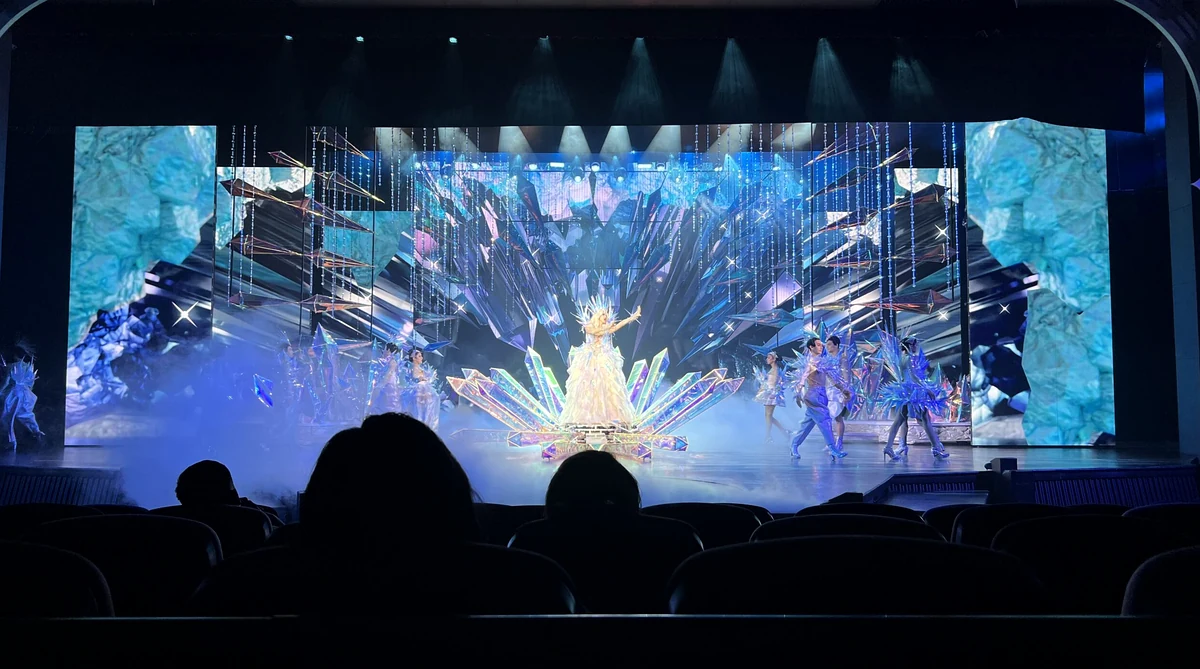
The true beauty of the evening lies not merely in breathtaking optical effects or studio-grade surround sound, but in the transcendent poise of the transgender performers themselves. Under brilliant spotlights that accentuate every delicate feature, hundreds of hand-beaded crystal costumes and billowing ostrich-feather plumes move in seamless harmony with intricate choreography. Every turn, alluring glance, and radiant smile on stage is far more than mere theatrical imitation—it is an authentic celebration of femininity, transforming the stage into an arena of self-affirmation and innate artistry before thousands of admiring eyes from around the world.
When the velvet curtain falls to thunderous applause after seventy-five exhilarating minutes, the night continues through a signature interactive tradition outside the main lobby and theater plaza. Beneath the bright lights of the Pattaya night, the performers step outdoors in their most resplendent regalia, smiling warmly as they welcome direct admiration from the public. Guests are invited to step up and capture commemorative photos alongside their favorite stars. This ritual is paired with a refined, well-established local tipping etiquette, typically ranging from 100 to 200 Baht per photo with a performer. This modest gesture is far more than a gratuity; it is a respectful tribute and well-earned recognition of the grueling rehearsals and tireless dedication of the brightest blossoms illuminating this glamorous night.

Once the crimson curtains close on the magnificent choreography of Tiffany’s or Alcazar along bustling Pattaya Sai Song, the intoxication of sight and sound never fades—instead, it seamlessly transitions into an irresistible culinary expedition. Pattaya by night thrives not only on the pulse of dazzling lights, but also on the fragrant blue wisps of smoke drifting from open-air street kitchens where the soul of Thai gastronomy lives. A magical interplay between humble street-food charm and abundant local seafood turns the neighborhoods surrounding these two grand theaters into a nocturnal culinary paradise, inviting travelers to prolong their post-show euphoria.
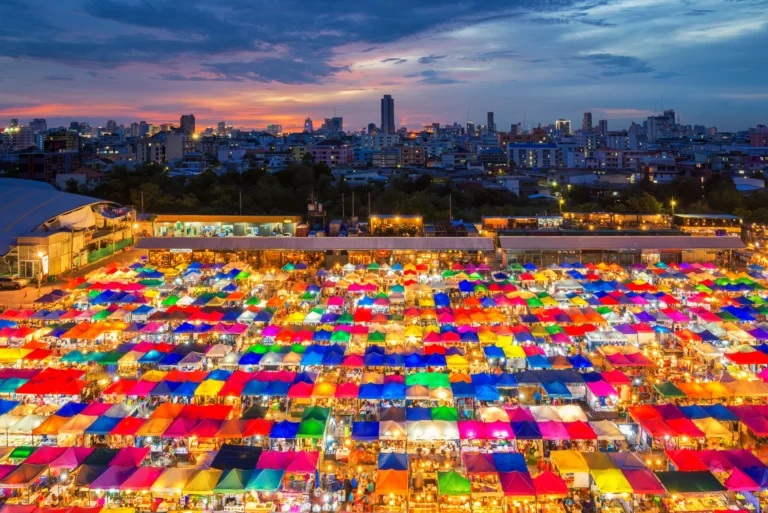
Just steps away from the glittering auditoriums, the Central Marina complex and Pattaya Night Bazaar open into a lively culinary arena where the rhythmic clatter of cast-iron woks mingles with the steady thud of wooden pestles. Here, the essence of Siamese street food shines in a steaming plate of fresh-prawn Pad Thai. Chewy rice noodles are tossed over roaring flames in a tangy tamarind and sweet palm-sugar glaze, accented with savory dried shrimp, golden tofu cubes, and plump tiger prawns hauled fresh from the gulf, finished with crushed roasted peanuts and crisp bean sprouts. Right beside it, green papaya salad (Som Tum) is pounded to order like a rhythmic solo performance, marrying crunchy shredded papaya with fiery bird’s-eye chilies, purple garlic, yardlong beans, cherry tomatoes, and rich fish sauce in an explosion of sour, spicy, salty, and sweet flavors. To soothe the tropical heat, traditional mango sticky rice provides the ultimate finale—glossy glutinous rice steeped in rich pandan-infused coconut cream paired with sweet, juicy slices of golden Nam Dok Mai mango.
While the night markets pulse with the freewheeling, fast-paced energy of a sleepless entertainment city, heading north toward the historic fishing village of Naklua leads wanderers into a quieter culinary dimension steeped in heritage. Long before Pattaya transformed into an international resort hub, Naklua was a centuries-old fishing port where generations of seafaring families preserved the art of preparing ultra-fresh seafood. Unpretentious eateries and waterfront restaurants sit right along the surf, where salty breezes rustle through ancient coconut palms, offering unhurried coastal dining elevated by the unmatched freshness of catches pulled straight from the Gulf of Thailand.

The signature dish cementing Naklua’s seafood reputation is lobster grilled with garlic butter over mangrove charcoal. Firm, sweet white lobster tails are split down the middle and brushed generously with aromatic garlic-infused butter, sizzling gently over glowing embers to lock in the pure, delicate sweetness of the deep sea. Sharing the spotlight is the celebrated salted-egg curry crab (Pu Pad Pong Satid)—a triumph of creative coastal culinary fusion. Meaty, glossy-shelled sea crabs are wok-tossed in a golden curry sauce enriched with creamy milk, mild chili oil, and velvety mashed salted egg yolks. The lush, herb-scented sauce coats every crisp crab claw, awakening the senses with a seamless balance of richness, savory depth, and natural sweetness. Thus, dining after the final curtain becomes far more than a late-night meal—it completes a holistic cultural pilgrimage uniting theatrical artistry with the bountiful coastal terroir of Thailand’s Eastern Seaboard.
To fully savor the visual feast at Pattaya’s two most celebrated art sanctuaries, understanding local transit routes and theater schedules is essential preparation. Commandingly positioned right along the brightly lit arterial Pattaya Sai 2, both Alcazar Cabaret and Tiffany’s Show boast prime accessibility for visitors. From central Pattaya Beach, travelers can enjoy a leisurely stroll or hop aboard a songthaew—the iconic shared pickup taxi woven into Thailand’s everyday street culture—looping along the one-way coastal circuit for a very modest fare. If arriving from North Pattaya, the unmistakable visual landmark is the famous Dolphin Roundabout, located just a few minutes’ easy walk from Tiffany’s theater.
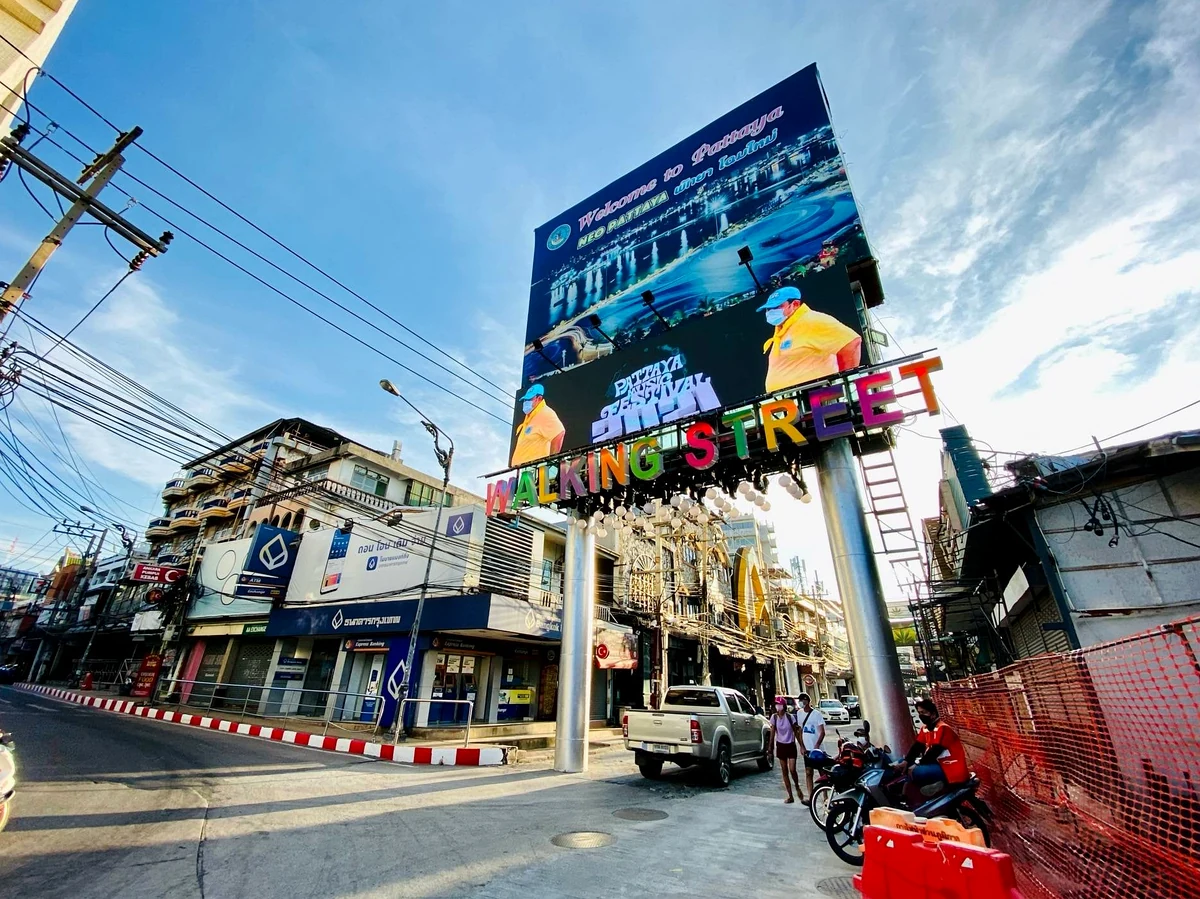
Curtains rise at these thousand-seat venues consistently every evening across three to four consecutive showtimes, typically scheduled at prime slots: 5:00 PM, 6:30 PM, 8:00 PM, and 9:30 PM. Each theatrical revue runs approximately seventy to seventy-five minutes at a brisk, uninterrupted pace. Seasoned travelers recommend arriving in the lobby at least thirty minutes prior to curtain time to redeem vouchers, collect your complimentary welcome drink, and locate your seats comfortably within the expansive multi-tiered auditorium.
Seating is thoughtfully tiered to optimize sightlines, and choosing the right seat category plays a decisive role in the emotional impact of the performance. The premier visual experience is concentrated in the VIP section—specifically central rows five through fifteen. This golden focal distance aligns naturally with human eye perspective, allowing guests to take in the full sweeping scale of the stage sets while simultaneously appreciating every subtle facial expression and intricate beadwork detail on the performers’ gowns, without straining their necks too close to the apron or losing sightlines from the far wings.
Beyond enjoyment, adhering to theater etiquette is strictly enforced by venue management. Video recording, photography, and live streaming are strictly prohibited throughout the entire performance to protect intellectual property, choreography rights, and proprietary lighting and sound designs. Any infraction is swiftly addressed by ushers using targeted laser pointers directed at the seat. Once the velvet curtain falls, the entire cast steps out onto the spacious plaza in front of the lobby to pose for souvenir photos with fans; keeping small bills handy—roughly 50 to 100 Baht per photo—offers a courteous way to express appreciation for their genuine artistic dedication.
Finally, in a resort paradise rife with commercial traps, travelers should exercise caution around suspiciously cheap tickets hawked by unauthorized street touts, which often carry the risk of obstructed rear seating or mandatory high-pressure shopping detours. Rather than navigating unexpected hassles on your own, choosing reputable travel operators committed to transparent standards and zero forced shopping stops ensures your journey retains its pure cultural discovery focus. These dazzling, deeply human theatrical experiences are thoughtfully woven into premium curated itineraries—such as an all-inclusive Thailand tour package crafted specifically for travelers seeking to experience the finest artistry of the East in comfort and depth.