The art of traditional Thai therapeutic massage, known by its indigenous name Nuad Thai (นวดไทย), is far more than a mere method of physical relaxation; it is a profound crystallization of Eastern philosophy, Buddhist spirituality, and traditional medical wisdom refined over millennia. The origins of this healing lineage trace back to the legendary figure of the Great Physician Jivaka Kumarabhaccha, a contemporary master healer who served as the devoted personal physician to Gautama Buddha and the Sangha in ancient India. Revered throughout the Land of Smiles as the Father of Traditional Medicine (Mor Jivok), his teachings on energetic balance and Ayurvedic medicine traveled alongside Theravada Buddhist missionary monks into the lower Chao Phraya River basin. By the glorious era of the Sukhothai Kingdom in the 13th and 14th centuries, this philosophy of mind-body healing had taken firm root, laying the initial foundations for the system of invisible energy pathways running through the human body, known as Sen lines.
Entering the golden age of the Ayutthaya Kingdom, which spanned from 1350 to 1767, Nuad Thai officially stepped beyond the quiet confines of Buddhist monasteries and entered the grand royal court. Under the wise reign of King Narai the Great between 1656 and 1688, this art of bodywork was elevated into an essential branch of medicine dedicated directly to serving the royal family and court officials. The royal court established a strict hierarchy of titles exclusively for royal massage physicians, known as Mo Nuad, who were entrusted with documenting and perfecting acupressure techniques, treating musculoskeletal injuries, and restoring vitality following prolonged military campaigns. However, following the devastating fall of Ayutthaya, countless priceless medical manuscripts inscribed on palm leaves were consumed by the flames of war, placing this treasury of ancient knowledge in peril of being lost forever.
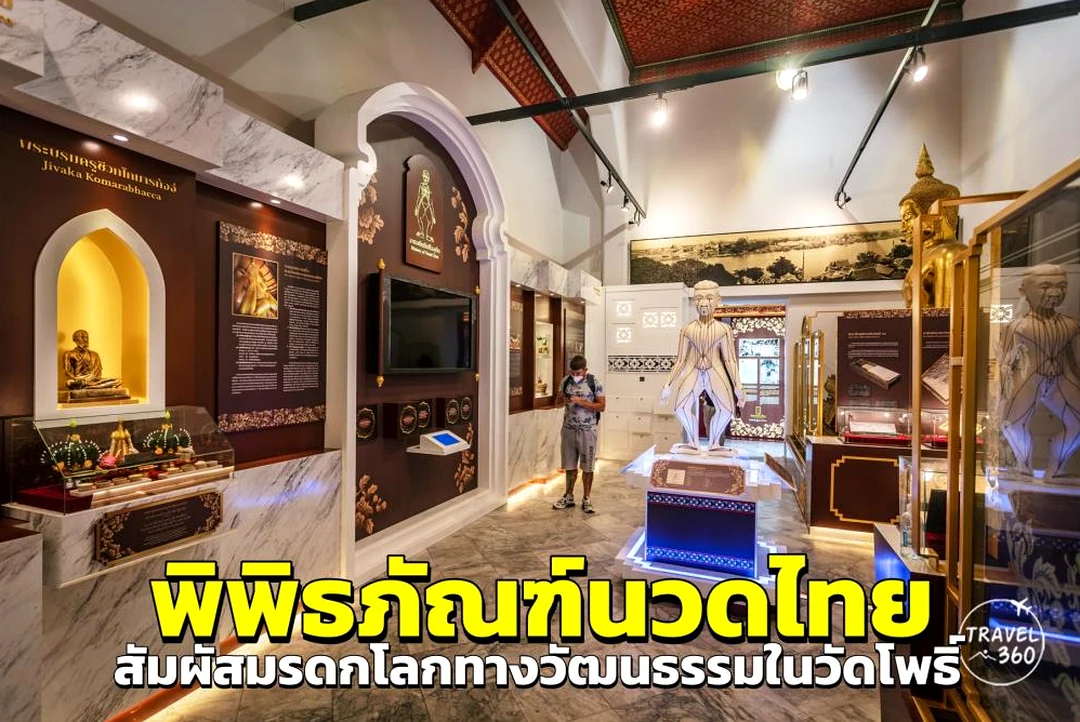
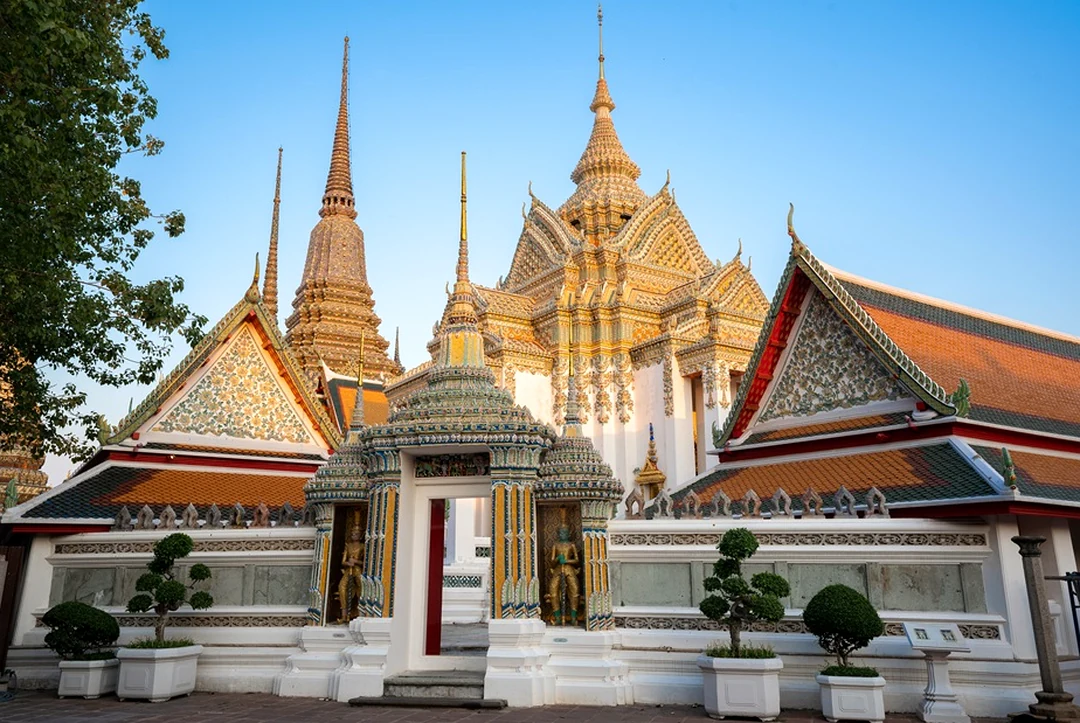
The great renaissance of Nuad Thai truly began when the Rattanakosin Kingdom was established in present-day Bangkok. In 1788, recognizing the urgent need to rescue this ancestral medical heritage, King Rama I issued a royal decree to gather all surviving fragments of knowledge and commissioned anatomical diagrams of the Sen energy pathways to be engraved onto marble tablets prominently displayed within the grounds of Wat Chetuphon, widely known as Wat Pho Temple. In 1832, King Rama III continued this large-scale revival by undertaking a major restoration of Wat Pho, transforming the monastery into Siam’s very first public university. The monarch ordered the casting of dozens of metal statues depicting the self-healing and body-stretching postures of ascetic hermits, known as Ruesri Dat Ton, while also inscribing sixty detailed meridian charts onto stone pillars lining the temple cloisters to make medical knowledge accessible to the general public. Carrying this vision forward, in 1870, King Rama V convened the kingdom’s finest physicians to compile the comprehensive medical encyclopedia titled Tamra Photsachan, formally systematizing therapeutic massage theory into the nation’s evidence-based medical foundation.
Throughout the vicissitudes of the 20th century, Nuad Thai faced considerable challenges with the influx of Western medicine—most notably during the wave of rapid commercialization in the 1980s and 1990s, which often caused this sacred healing art to be misperceived through the lens of casual recreational services. Confronted with this reality, the Royal Thai Government decisively restructured and revitalized the discipline, marked by the enactment of the Protection and Promotion of Thai Traditional Medicine Wisdom Act in 2016 to safeguard its authenticity and enforce rigorous professional training standards. This enduring revival reached its crowning triumph on December 12, 2019, during a session held in Bogotá, Colombia, when UNESCO officially inscribed Nuad Thai onto the Representative List of the Intangible Cultural Heritage of Humanity, affirming the timeless value of a remarkable healing philosophy.
From a geographical perspective, the art of Nuad Thai does not exist in isolation; rather, it coalesces into a therapeutic network stretching across the distinct microclimates and geomantic landscapes of the Siamese kingdom. This connectivity is reinforced by a remarkably integrated transportation infrastructure, allowing travelers’ journeys—whether in pursuit of master instruction or physical rejuvenation—to unfold seamlessly. From Bangkok’s two international aviation gateways, Suvarnabhumi and Don Mueang, the Airport Rail Link and SRT Red Line urban rail networks whisk passengers straight into the heart of the capital in roughly 30 to 45 minutes. Looking further ahead, the Sino-Thai high-speed railway project is steadily taking shape alongside the East-West Economic Corridor (EWEC) and the North-South Economic Corridor, weaving cross-border overland arteries that link urban centers of traditional medicine with the forested valleys of the North and the tropical coastlines of the South.
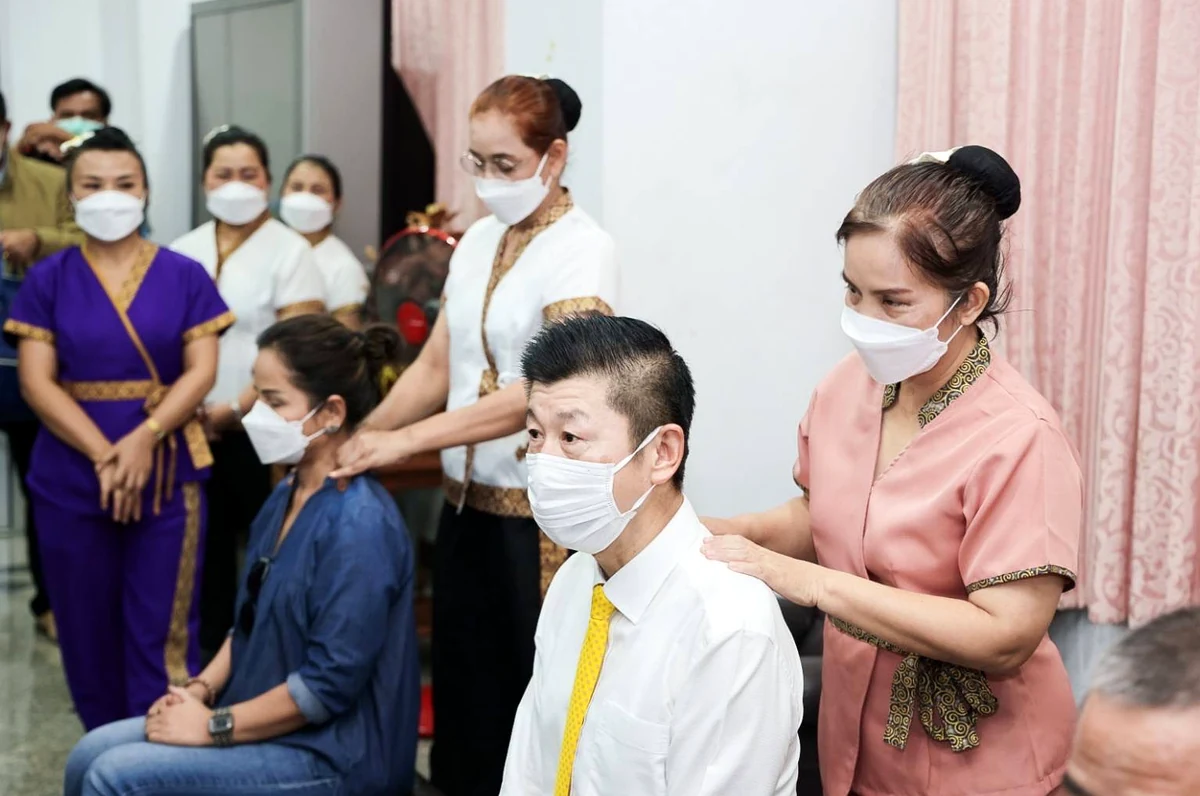
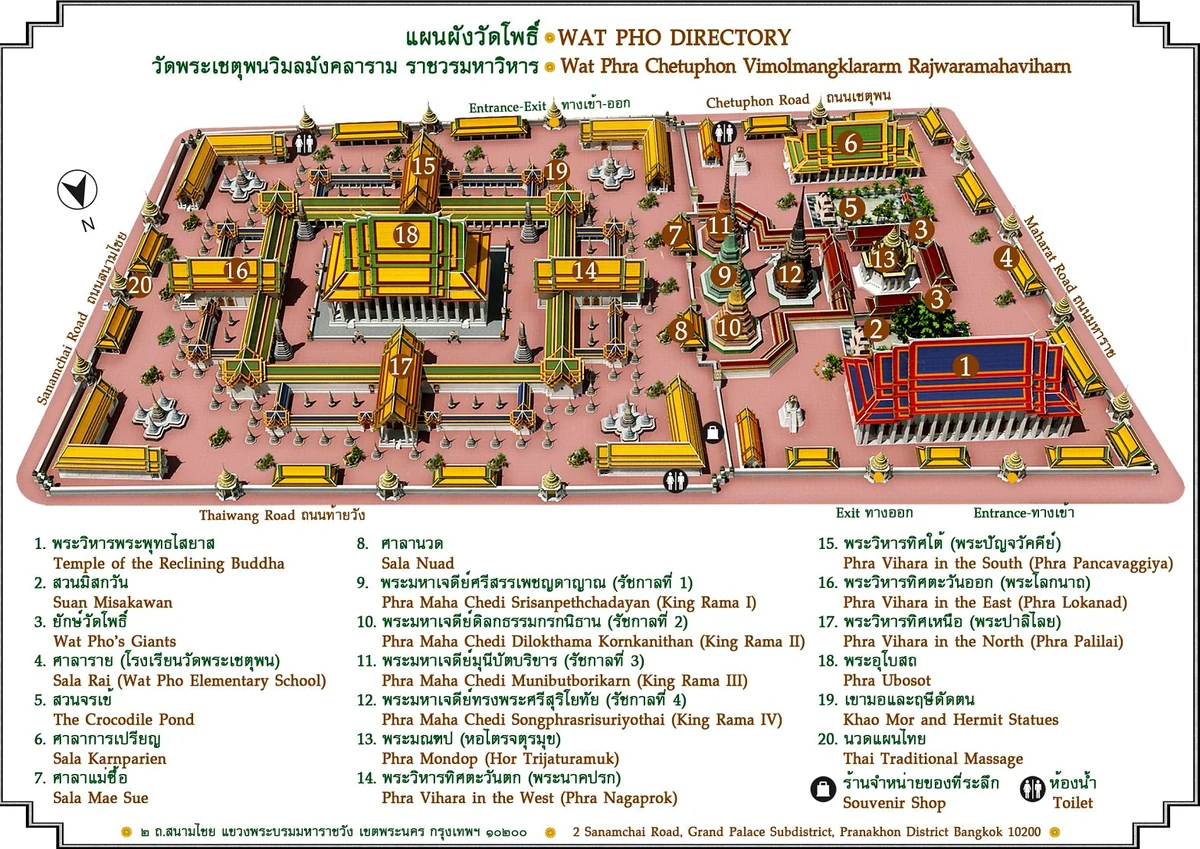
On the traditional healing map, the Central Medical Heritage Route connecting the ancient capital of Ayutthaya with Bangkok embodies the fertile terrain of the Chao Phraya River delta, where flowing waters nourish auspicious energy for health and longevity. At the heart of this route stands Wat Pho (Wat Phra Chetuphon), the sacred sanctuary preserving the entire corpus of ancient medical wisdom approved by King Rama III for inscription on granite tablets. The spatial layout of Wat Pho reflects an absolute harmony between Buddhist spiritual architecture and natural energy planning. Here, sandstone statues of Ruesi Dat Ton hermits vividly illustrating self-massage and meridian-stretching postures sit serenely within courtyards shaded by Bodhi trees. The royal Nuad Thai protocol handed down at this temple demands precise identification of the ten primary energy channels known as Sen Sib, employing static pressure from the thumbs and heels of the hands to release stagnant Lom wind energy and restore dynamic equilibrium throughout the entire body.
Venturing beyond the alluvial plains, the Northern Wellness Route guides travelers up to Chiang Mai and Chiang Rai, where the Lanna school of healing flourishes amidst the rolling mountain terrain of the Mae Rim Valley. Tucked beside teak forests kissed year-round by cool mountain breezes, open-air timber treatment salas are constructed according to the classic geomantic principle of backing against mountains and facing water, throwing open their spaces to welcome pure, oxygen-rich air. The Lanna tradition in Mae Rim preserves the esoteric Tok Sen technique, utilizing a wooden mallet and wedge carved from the trunk of an ancient, lightning-struck tamarind tree to tap rhythmically along the meridian pathways, sending mechanical vibrations deep into the fascial layers to completely release muscular tension. The warm, pungent aroma rising from steamed Luk Pra Kob herbal compresses—blending plai ginger, lemongrass, turmeric, and young tamarind leaves—intertwines with the resonant, rhythmic tapping to create a deeply meditative highland sanctuary.
Heading south, the Coastal Retreat Route unveils an entirely different landscape across Phuket, Krabi, and Koh Samui, where dramatic limestone karst cliffs rise behind properties overlooking the turquoise waters of the Andaman Sea and the Gulf of Thailand. The synergy between a marine environment rich in negative ions and world-class five-star wellness spa complexes has elevated Nuad Thai into an ultra-luxurious restorative experience. On open-air wooden decks right at the water’s edge, full-body stretching and massage rituals are practiced in rhythmic dialogue with the ocean tides. Practitioners fluidly use their elbows, knees, and feet to guide guests into passive yoga-like postures, naturally opening the chest and flexing the spine. The resonance of salty sea breezes, masterful anatomical alignment, and slow, mindful breathing transforms healing journeys along the southern coastline into a holistic masterpiece uniting humanity and the ocean.
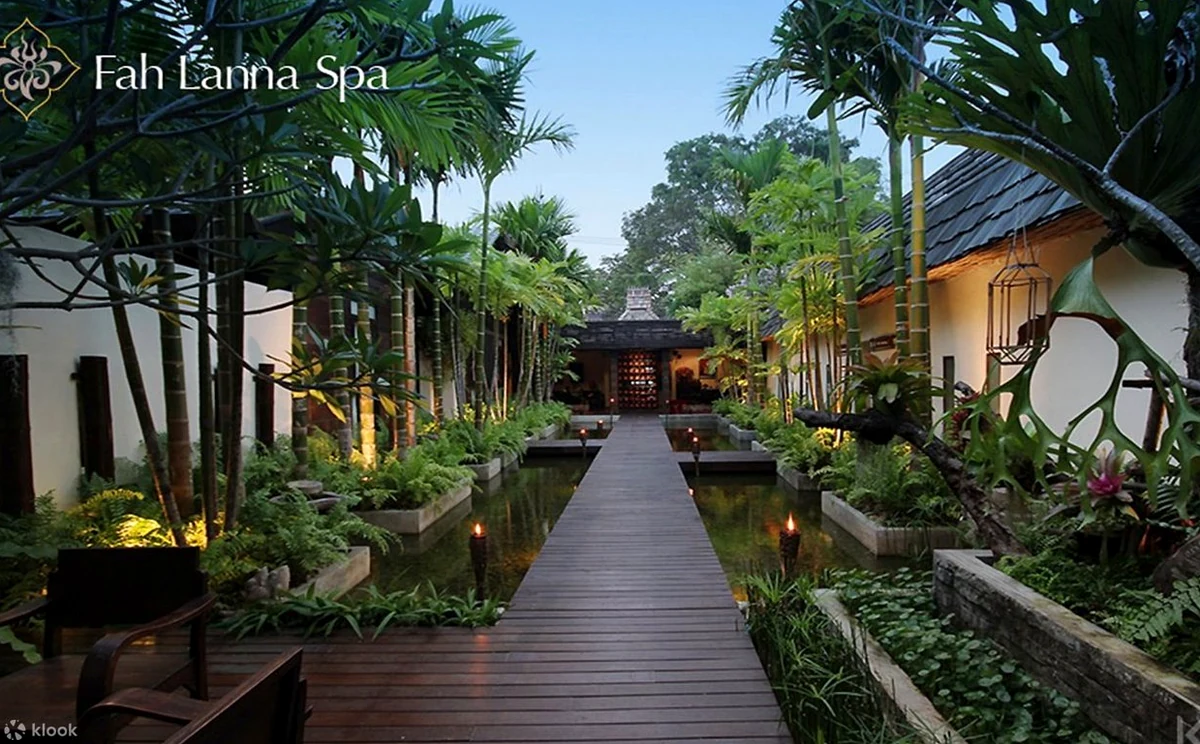
An authentic Nuad Thai practice space worthy of UNESCO Intangible Cultural Heritage status is never merely a stopover for physical care; it is a therapeutic microcosm meticulously designed in accordance with Lanna Buddhist geomancy and Rattanakosin aesthetic canons. This indigenous architectural philosophy aims to restore balance among the four elements—earth, water, wind, and fire—within the human body through spatial layout and airflow orientation. Stepping through the doorway of a genuine Nuad Thai sanctuary, one’s visual senses are immediately soothed by a classic palette: the deep, earthy brown of natural timber symbolizing the steadfastness of Mother Earth, luminous yet humble royal gold reflecting reverence for the Buddha, accented with the cool, serene greens of medicinal herbs and foliage. Every architectural line eschews harsh angles in favor of gentle arches, smooth timber floors, and graceful partitions, generating an energy field of absolute stillness entirely removed from the bustle of the outside world.
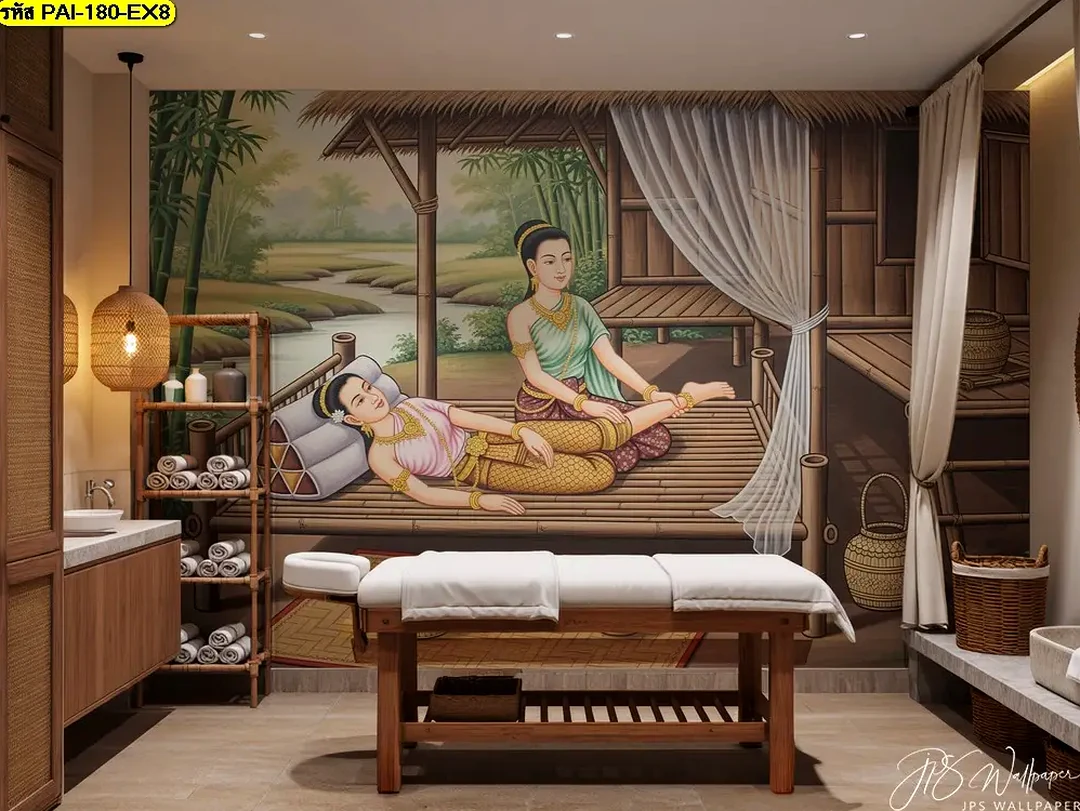
Artisanal craftsmanship and the selection of natural materials serve as the very soul defining the character of the space. The entire structural framework of pillars, flooring, and furnishings in traditional establishments is typically hewn from solid teak—a prized hardwood of northern Thailand celebrated for its timeless durability and subtle signature fragrance. Each teak panel is intricately openwork-carved by local artisans with lotus motifs, Kanok vine scrolls, or protective mythological patterns, imbuing the room with dignified cultural depth. The solidity of the timber is harmoniously balanced by flowing curtains of handwoven Thai silk draped from high ceilings, demarcating private zones while ensuring unobstructed circulation of vital energy. Rather than relying on harsh direct illumination, subtle ambient lighting utilizes woven bamboo lampshades or handmade Saa paper lanterns that cast a soft, warm golden glow, gently guiding the recipient’s mind into a state of deep meditation from the very first moment.
A well-appointed Nuad Thai establishment features a carefully structured layout that guides visitors through a multi-layered healing journey. It begins with a dedicated cleansing and herbal foot-soak area, where tired feet are immersed in teakwood tubs or antique brass basins filled with warm water infused with mineral salts, fresh lime slices, and botanical petals. Next comes a clear distinction between two treatment formats: communal therapy halls and private single rooms. In shared spaces, sturdy, wide therapy mats upholstered in coarse woven cotton are placed directly on the floor in keeping with ancient monastic standards, leaving enough room for practitioners to effortlessly use body weight, leverage, and yoga-like stretching postures without the height constraints of Western beds. In private treatment rooms, complete seclusion creates a sanctuary-like calm, often enhanced with a natural stone herbal bath or a traditional wet steam room brewed from freshly harvested aromatic leaves.
Alongside this tangible architecture, an invisible yet potent dimension is woven through the folk art of therapeutic aromatherapy. The air is continuously purified by delicate wisps from fresh, pungent lemongrass essential oil, mingling with the warm, sweet fragrance of cardamom, the cooling note of camphor, and the soft, lightly creamy aroma of cold-pressed virgin coconut oil. This herbal scent blend penetrates wood grain and fabric fibers, directly stimulating the sense of smell to help open the chakras and clear the body’s Sen Sib meridian network. These botanical notes pair with the gentle melodies of traditional instruments such as the Ranat or the soft Khlui flute, creating a soothing soundscape and scent backdrop that eases the nervous system into complete release.
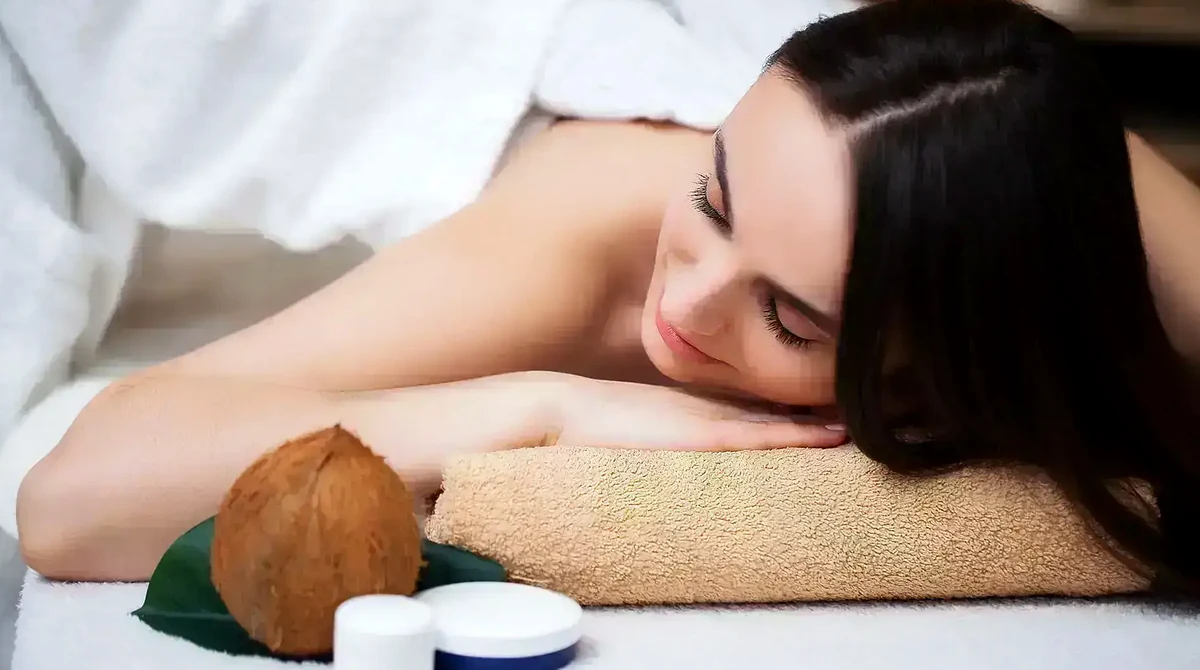
This exemplary scale and architectural spirit come alive across both academic origins and some of the most renowned wellness centers in the Land of Smiles. Foremost and closest to the source is Wat Pho Traditional Medical School, which preserves an authentic, unpretentious treatment setting in the shade of revered stupas while maintaining a millennia-old contemplative atmosphere. Alongside it, well-known names such as Health Land and Let’s Relax have elevated this layout into spacious hospitality venues while staying true to warm tones and standard floor mats. At the upper tier of restorative wellness resorts, luxury retreats like Rarin Jinda, Panpuri Wellness, and Divana Spa elevate spatial design into art, harmonizing Siamese royal herbal traditions with modern minimalist architecture to turn each Nuad Thai session into a refined sensory pilgrimage that awakens all five senses.
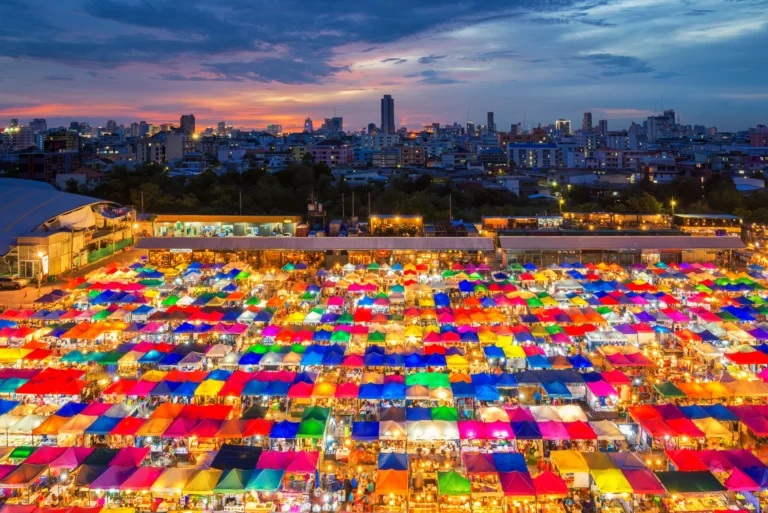
As dusk settles over the legendary Chao Phraya River or casts misty shadows across the moss-covered ramparts of the ancient city of Chiang Mai, nighttime in the Land of Smiles does not only come alive with vibrant night markets—it also shifts into the enchanting stillness of Nuad Thai wellness sanctuaries. Unlike the fast pace of the modern street outside, traditional therapy centers and eco-retreats stay open late into the night, becoming welcoming refuges for travelers seeking mind-body balance after a long day of exploring. Here, lighting design is celebrated as an invisible healing element; darkness is gently softened by the amber glow of handmade Saa mulberry paper lanterns or flickering natural beeswax candles set inside Celadon ceramic bowls. That dim, half-lit ambiance blends with light, fragrant herbal smoke from wild plai ginger root, takrai lemongrass, and kaffir lime peel rising from clay steaming pots, immediately quieting visual distractions and guiding the mind into deep meditation.
Evening Nuad Thai spaces are staged like serene living theater, where traditional teakwood architecture in Northern Lanna style or dignified Rattanakosin royal style is meticulously restored. Individual treatment alcoves are loosely partitioned with raw woven silk curtains dyed with natural tree bark, over dark glossy reddish-brown wood floors that reflect the warm flicker of candlelight. Before the meridian-clearing ritual begins, travelers’ weary feet are pampered in engraved brass basins, soaking in warm water scattered with pink lotus petals, pure white mali jasmine blossoms, fresh lime slices, and coarse mineral salts. Complementing the lighting and visual artistry are refined layers of sound therapy: the resonant, warm strike of the Ranat Ek wooden xylophone blending with the gentle Khlui bamboo flute, or wordless traditional melodies tuned precisely to a 432 Hz vibrational frequency. This subtle interplay fosters a sense of deep peace, letting the guest’s brainwaves drift from everyday tension into calm, mindful rest.
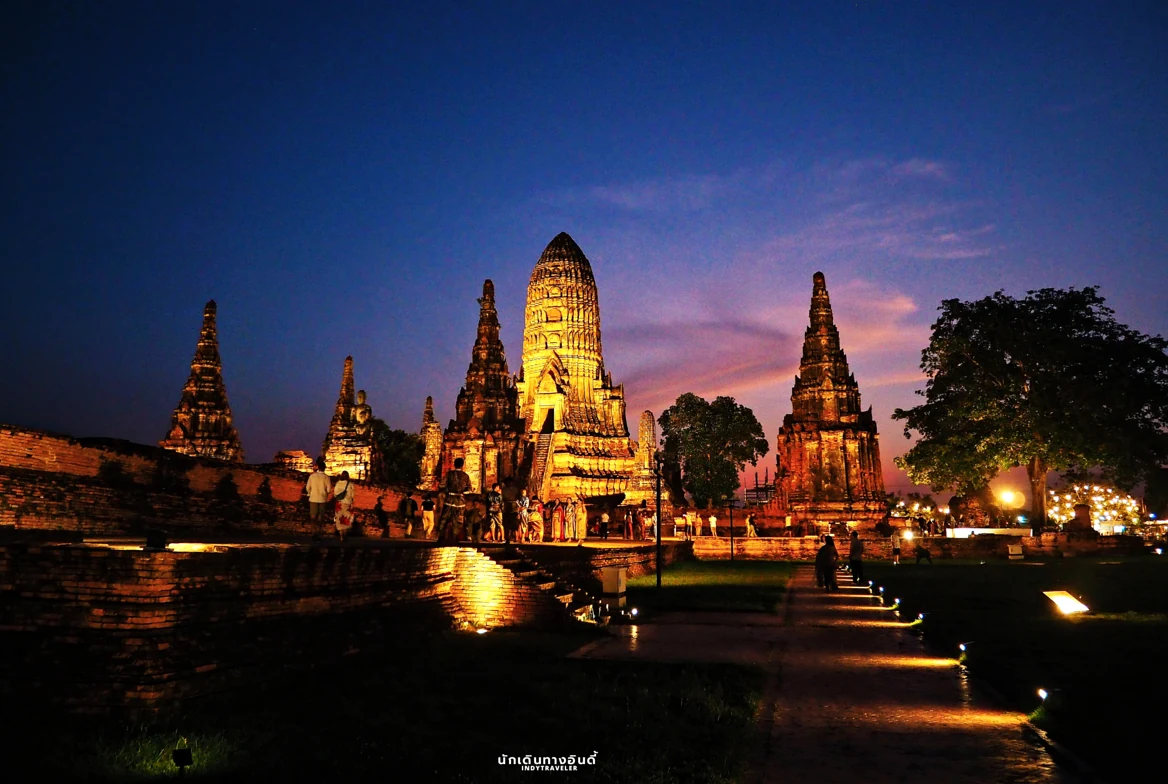
The highlight of the nighttime recovery experience lies in the seamless blend of passive yoga-like stretching and warm herbal compress therapy, Luk Pra Kob, beneath the flickering light of oil lamps. Rooted in the deep medical philosophy of Jivaka Komarabhacca—the physician to the Buddha more than two millennia ago—therapists in soft silk attire move with fluid grace reminiscent of classical dancers. Their skilled hands, elbows, and heels follow the ten Sen Sib energy lines running across the body, applying rhythmic pressure in sync with the traveler’s deep breath. As muscle bundles gradually let go under precise mechanical work, coarse cloth bundles filled with thorny mugwort, wild tamarind leaves, turmeric, and camphor—steamed until piping hot—are pressed and rolled along the spine. The warmth and medicinal essential oils soak deep into muscle fibers, stimulating blood circulation and releasing energy blockages to create a soothing thermal-herbal resonance in the quiet night.
The renewal journey is completed by restorative local cuisine served right in a peaceful garden pavilion after the session. Beneath spreading old trees in the evening garden, beside a lightly smoking coconut-oil lamp, guests are treated to warm herbal teas such as Nam Dok Anchan butterfly pea tea shimmering in violet hues with a touch of wild forest honey, or warming lemongrass-and-ginger tea that helps balance yin and yang and support detoxification across the internal organs. Light, wholesome dishes such as fragrant lotus-seed brown rice porridge or beauty-nourishing snow fungus soup are artfully plated on rustic stoneware, rounding out a complete restorative cycle. Stepping out of that tranquil sanctuary back into the nighttime pulse of the city, travelers carry not only a lighter, more supple body, but also a deeper appreciation for a human intangible heritage preserved and elevated across centuries of history.
In the worldview of traditional Siamese medicine—originating in the Sukhothai kingdom era, passing through the flourishing Ayutthaya dynasty, and systematized at Wat Pho during the Rattanakosin period—Nuad Thai acupressure and meridian work has never been separate from restorative cuisine. Through the lens of Theravada Buddhist philosophy and centuries-old medical texts, the human body is a microcosm made up of four foundational elements: Earth (Pathavi), Water (Apo), Fire (Tejo), and Wind (Vayo). After hours of stretching and targeted work along the ten Sen Sib meridian pathways, Prana life force is freed within the body, and traditional home-style food serves as the ultimate key to replenishing vital energy and returning the five internal organs to their natural harmony.
The culinary ritual accompanying Nuad Thai always begins with a tea service that opens the mind. Butterfly pea flower tea (Nam Dok Anchan) in a gentle blue hue, blended with pungent aged ginger extract and bruised lemongrass, is thoughtfully offered to visitors before they enter the incense-scented treatment room. The rich blue of butterfly pea flowers, abundant in anthocyanins, helps clear the meridians, soothe stagnation in blood and vital energy, and calm nervous impulses strained by long travel. Paired with the warming spice of fresh ginger and wafting lemongrass essential oil, the cup gently stokes the transformative Fire element, Tejo, guiding body and mind into deep relaxation. Then, once the session ends, a similar warm herbal tea acts like a restorative spring, rinsing away metabolic byproducts released from tight muscles, steadying the breath, and completing the physical cleansing cycle.
Moving into the recovery meal of the healing journey, Tom Kha Gai—chicken soup simmered with galangal and coconut milk—appears as a true royal tonic for bodies that have just undergone deep bodywork. Fragrant, warming slices of young galangal, bruised kaffir lime leaves, fresh lemongrass stalks, and bird’s eye chilies are gently simmered in light, rich coconut milk alongside tender shredded native chicken breast. According to indigenous medical theory, the deep warmth of galangal and kaffir lime leaf essential oil penetrates outward to supplement the Fire element, warming deep meridian layers that have just been worked. Healthy fats from coconut paired with clean protein from chicken absorb smoothly into the musculoskeletal system, easing lingering soreness or stiffness in muscles and joints after the high-intensity bending, pulling, and stretching characteristic of Nuad Thai.
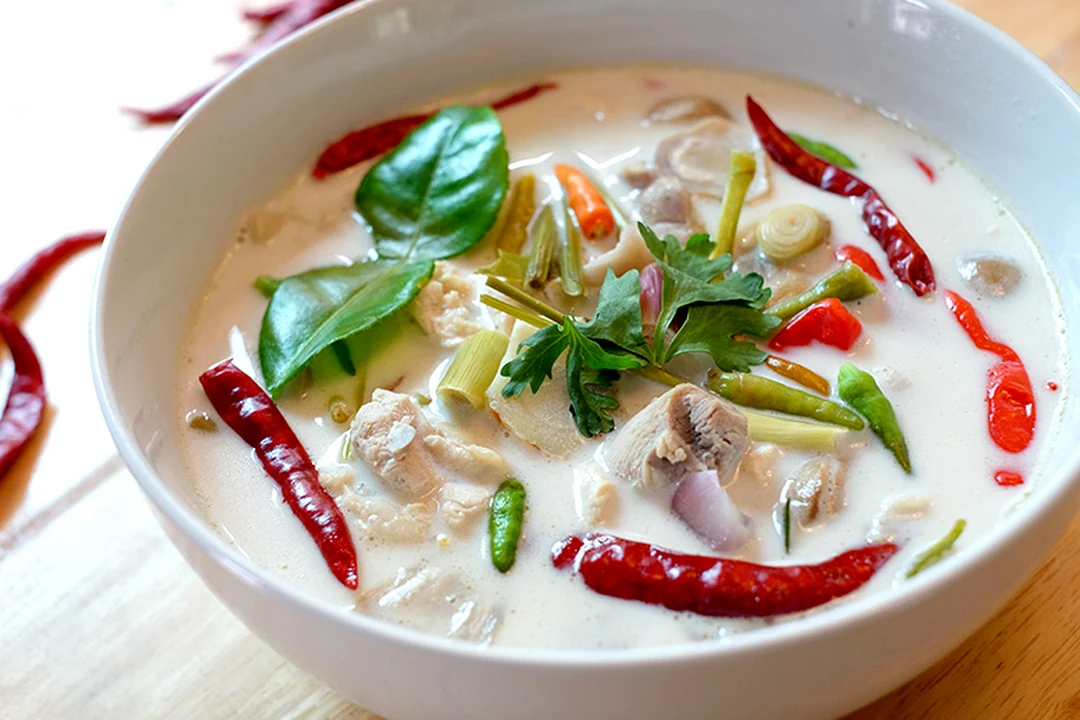
Balancing the gentle richness of the coconut-milk soup is the famed Nam Tok Moo, a botanical harmony originating from the tradition-rich Isan plateau. Lean cuts of pork neck or jowl are seasoned with natural spices, grilled over smoky charcoal until firm, sliced thinly, and tossed with crisp golden toasted sticky rice powder (Khao Khua), fresh lime juice, ground dried chili, thinly sliced shallots, and fresh herbs such as culantro, mint, and sweet basil. Its bright sourness and savory heat do more than awaken the palate—they also supply clean protein to rebuild muscle tissue. Notably, the fresh herbs in Nam Tok Moo act as a spark for the Wind element (Vayo), encouraging vigorous blood flow all the way to peripheral microvessels and dispersing any remaining heaviness in the body.
This therapeutic culinary symphony concludes fittingly with a celebrated royal dessert: traditional mango sticky rice, Khao Niew Mamuang. Premium, fragrant glutinous rice is steamed to a supple finish, infused with rich coconut cream and a hint of pure coarse salt, and served alongside ripe, golden Nam Dok Mai mango slices radiating a sweet nectar aroma. Unlike heavy industrial sweets that weigh down the stomach, the refined pairing of gentle energy from sticky rice and abundant natural digestive enzymes in ripe mango delivers soothing nourishment that restores vitality without straining a deeply relaxed digestive system. In the moment each soft grain of sticky rice melts on the tongue alongside the sweet brightness of mango, the Earth element (Pathavi) is steadily grounded, completing a holistic cycle of body-and-mind care where the boundary between royal bodywork and folk culinary art merges into a living, enduring heritage.
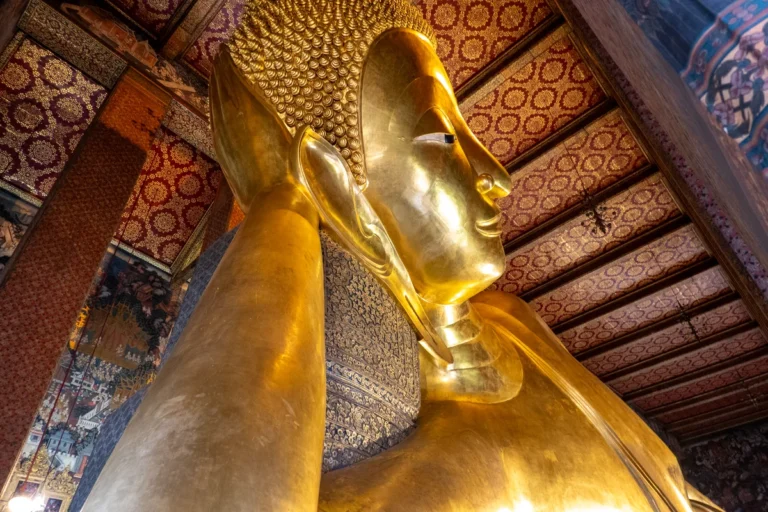
To experience the authentic depth of Nuad Thai, the first pilgrimage every enthusiast turns toward is the great temple of Wat Pho—home to the renowned Chetuphon Traditional Medicine and Massage School nestled beside the majestic Chao Phraya River. Located right in Bangkok’s historic Rattanakosin district, the ancient temple welcomes visitors daily from 08:00 to 18:30. Travelers can easily reach this sacred ground via the MRT Blue Line to Sanam Chai station followed by a less-than-five-minute stroll through a tree-lined historic lane, or by taking the Chao Phraya Express Boat to the Tha Tien pier. In the shaded treatment pavilions beneath the feet of the great Reclining Buddha, an hour of traditional acupressure or warm herbal compress therapy typically costs between 350 and 500 Baht—a remarkably modest fee for centuries-old scholarly wisdom passed down across generations.
Leaving behind the bustling rhythm of the capital and heading north, the ancient Lanna cultural cradle of Chiang Mai opens another remarkable branch of folk healing with the Chiang Mai Traditional Medical Center. This venue is a sanctuary preserving the famed Tok Sen technique—a meridian-clearing therapy that uses a wooden mallet and wedge crafted from lightning-struck tamarind wood to tap rhythmically along the ten Sen Sib energy lines. Open from 09:00 to 20:00, the center is easily reached by a rustic songthaew or tuk-tuk weaving past moss-covered city gates. Sessions for in-depth Tok Sen usually range from 400 to 700 Baht for 60 to 90 minutes, delivering a deep internal resonance to restore physical and mental balance.
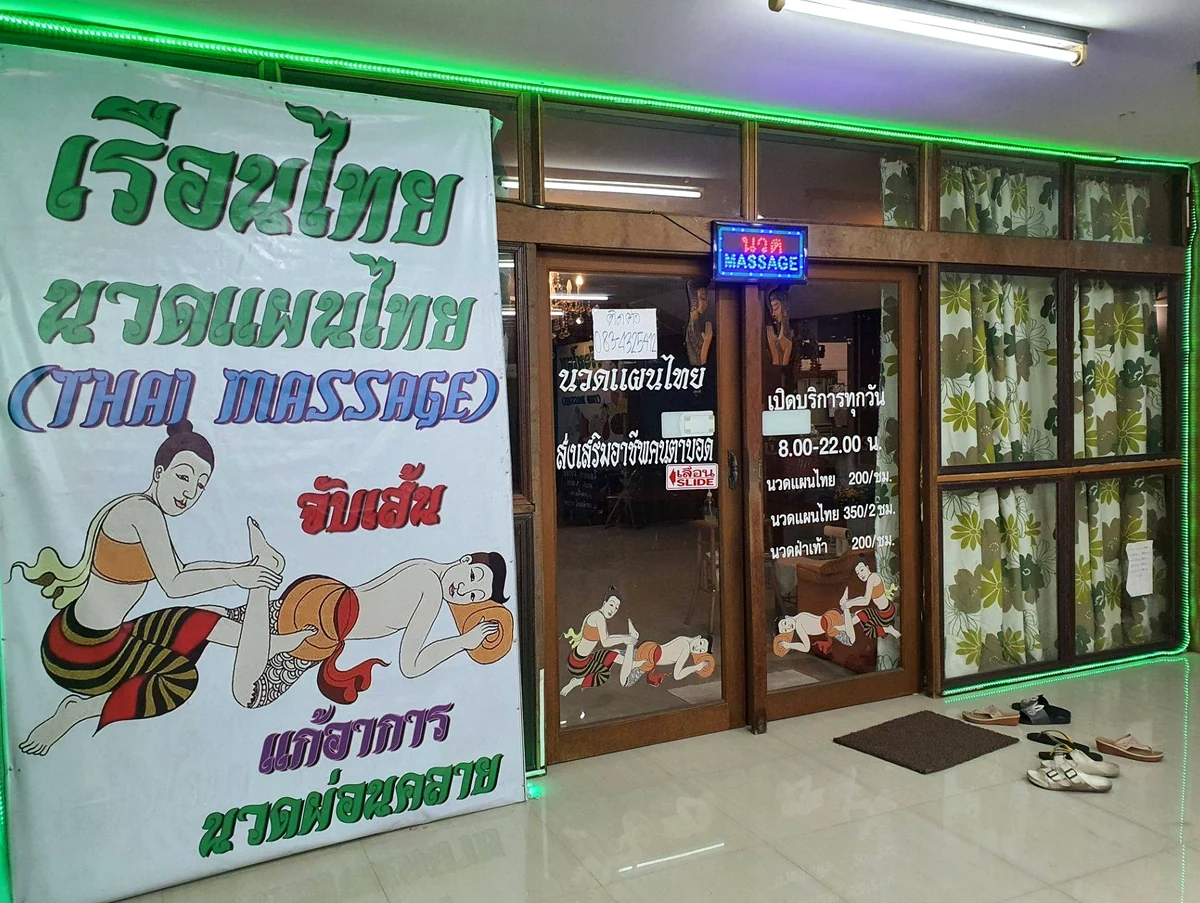
To ensure your experience of this heritage is both fulfilling and safe, travelers should observe strict principles of bodily awareness and interaction. Always wear loose, sweat-absorbent natural-fiber clothing—though most reputable treatment centers provide clean linen attire on site. Before starting a session, disclosing your medical history is essential: details about blood pressure, past musculoskeletal injuries, herniated discs, or pregnancy must be shared transparently so practitioners can calibrate pressure from their palms, elbows, and feet accordingly. This same care also calls on travelers to firmly say no to questionable roadside massage parlors lacking licensing from the Department of Health Service Support under Thailand’s Ministry of Public Health, as improper technique can lead to muscle strain or serious spinal complications.
A growing tourism market brings pitfalls from budget tour traps that often cut short heritage itineraries to herd visitors into front massage parlors, rushing through treatments to earn commissions from high-pressure sales of overpriced balms and low-grade herbal oils. The only way forward for travelers seeking refinement is choosing well-crafted Pure Wellness & Heritage Tours—an approach that upholds transparent service pricing, firmly rejects forced shopping, and partners exclusively with practitioners holding national certification granted by the royal government. Once petty commercial motives fall away, Nuad Thai returns to its rightful place as a meeting of mind and body, a quiet meditation journey across every muscle fiber.
Thoughtful preparation in both knowledge and itinerary turns your trip into an emotionally rich cultural exploration, where every stretch or pressure point recalls the care of ancestors. To ensure full access to authentic medical heritage spaces without worrying about complex logistics, choosing a dedicated all-inclusive tour package focused on wellness and cultural discovery will be the versatile key guiding you into lasting peace in the Land of the Golden Temple.